
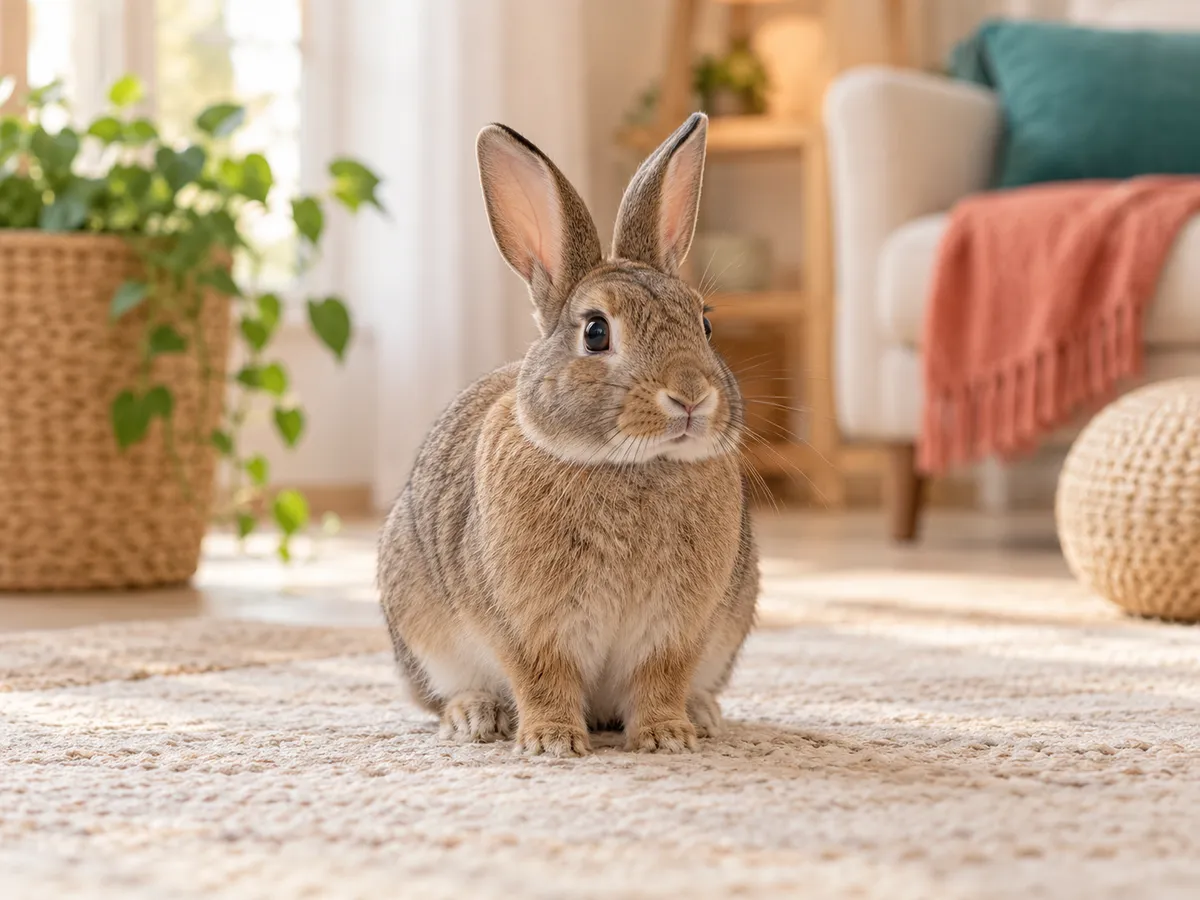
- Typical lifespan
- 8–12 years
- Social needs
- Should live with at least one companion of its kind
- Active hours
- Active at dawn and dusk
- Experience level
- Needs some experience
Values are typical ranges and vary with breed, husbandry and the individual animal.
Quick care summary
The care essentials for Rabbits.
- HayThe basis of the diet: plenty of fresh, good-quality meadow hay at all times.
- Greens and pelletsFresh greens every day; pellets a small, measured extra; fruit only now and then.
- Living spaceA large, safe area to run and hop, with places to hide.
- Social lifeRabbits are social and need a suitable companion and daily attention.
In depth
In short
- Unlimited, good-quality hay is the foundation of a rabbit's diet.
- Their teeth grow throughout life; a fibrous diet and chewing help wear them down naturally.
- Rabbits are social and usually benefit from living with a compatible companion.
- They need a large, safe space to run and hop.
- Most rabbits dislike being picked up; build trust at their level, on the floor.
In nature, rabbits are grazers and prey animals. They feed throughout the day, stay alert to spot danger from afar, and are most active early in the morning and in the evening. At home, too, they thrive when they can live out this nature.
What is life with a rabbit like?
Rabbits are curious, playful and often full of personality. They may show joy by leaping into the air and twisting. Trust takes time, though: approaching calmly at floor level and letting the rabbit make the first move works best.
Feeding routine
- Hay is the foundation. Your rabbit should always have plenty of fresh, good-quality grass hay. Hay matters for the digestive system and for the natural wear of teeth that keep growing throughout life.
- Fresh greens add daily variety. Introduce a new green in small amounts and watch how your rabbit handles it.
- Rabbit pellets, if used, should be a small, measured extra, not the main meal.
- Fruit and treats only occasionally and in very small amounts.
- Clean water must always be available.
Living space
Rabbits do not fit in a small cage. For much of the day they need a large, safe area where they can run, hop and stand up on their hind legs. That area should include a hiding box, a litter tray, hay and water. For free-roaming house rabbits, cables and chewable items must be protected.
Social life
Rabbits are usually happier with a companion of their own kind. Introducing two rabbits takes patience and should be done gradually. It is important to talk to your veterinarian about which rabbits can live together and about preventing breeding.
Coat and nail care
Rabbits clean themselves, but regular brushing helps, especially during moulting. Long-haired breeds need more frequent grooming. Nails should be checked regularly.
Frequently asked questions
Are rabbits good pets for children?
Rabbits are fragile and often dislike being held. Under adult responsibility, with children interacting calmly at floor level, they can be lovely family pets.
Can a rabbit be litter trained?
Yes, many rabbits learn to use a litter tray easily. Putting hay in or next to the tray makes it easier.
Can rabbits live alone?
They can, but most rabbits enjoy a richer life with a compatible companion. If you keep a single rabbit, you need to spend plenty of time with it every day.
Good to know
The most important points.
- Support natural behaviorPutting hay in a hay rack or in boxes encourages your rabbit's natural grazing and digging behavior.
- When to contact a vetRabbits can hide discomfort. If you notice a clear change in appetite, droppings or activity, contact a veterinarian promptly, ideally one experienced with rabbits.
Life stages
Approximate age ranges for Rabbit and the priorities of each stage.


Happier together
Create a free profile for your companion.
Enter the date of birth or an estimated age to see its life stage, weight history and matching guides in one place.
- Life-stage tracking
- Weight history
- Guides for its species
- Free account