
- Typical lifespan
- 8–12 years
- Social needs
- Prefers to live alone
- Active hours
- Active by day
- Experience level
- Needs some experience
Values are typical ranges and vary with breed, husbandry and the individual animal.
Quick care summary
The care essentials for Bearded dragons.
- Heat and lightA basking spot and a cooler end; a reptile UVB lamp is essential.
- FeedingJuveniles eat more insects, adults mostly fresh greens and vegetables.
- TerrariumA large terrarium where it can turn, move freely and climb.
- Care routineCheck temperatures regularly and replace the UVB lamp as recommended.
In depth
In short
- Bearded dragons are active by day and need a basking area.
- A heat gradient with warm and cool zones is essential for regulating body temperature.
- Proper UVB lighting is critical for bone health and must be replaced regularly.
- Juveniles eat more insects; adults eat more greens.
- They are usually housed alone.
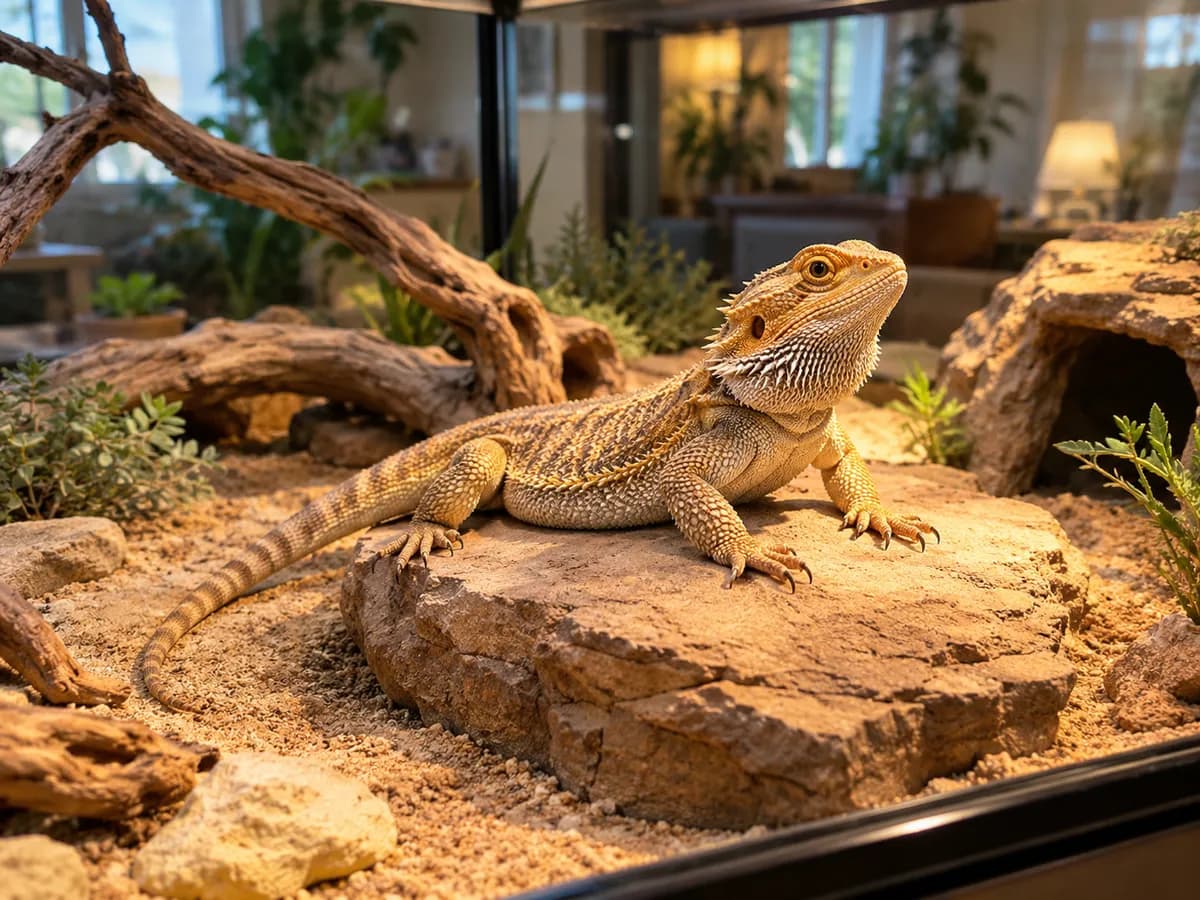
Bearded dragons (Pogona vitticeps) are lizards from the dry, hot regions of Australia. They bask, watch their surroundings and forage throughout the day. They are loved for their calm temperament, but their care requires far more than a simple glass tank.
Setting up the vivarium
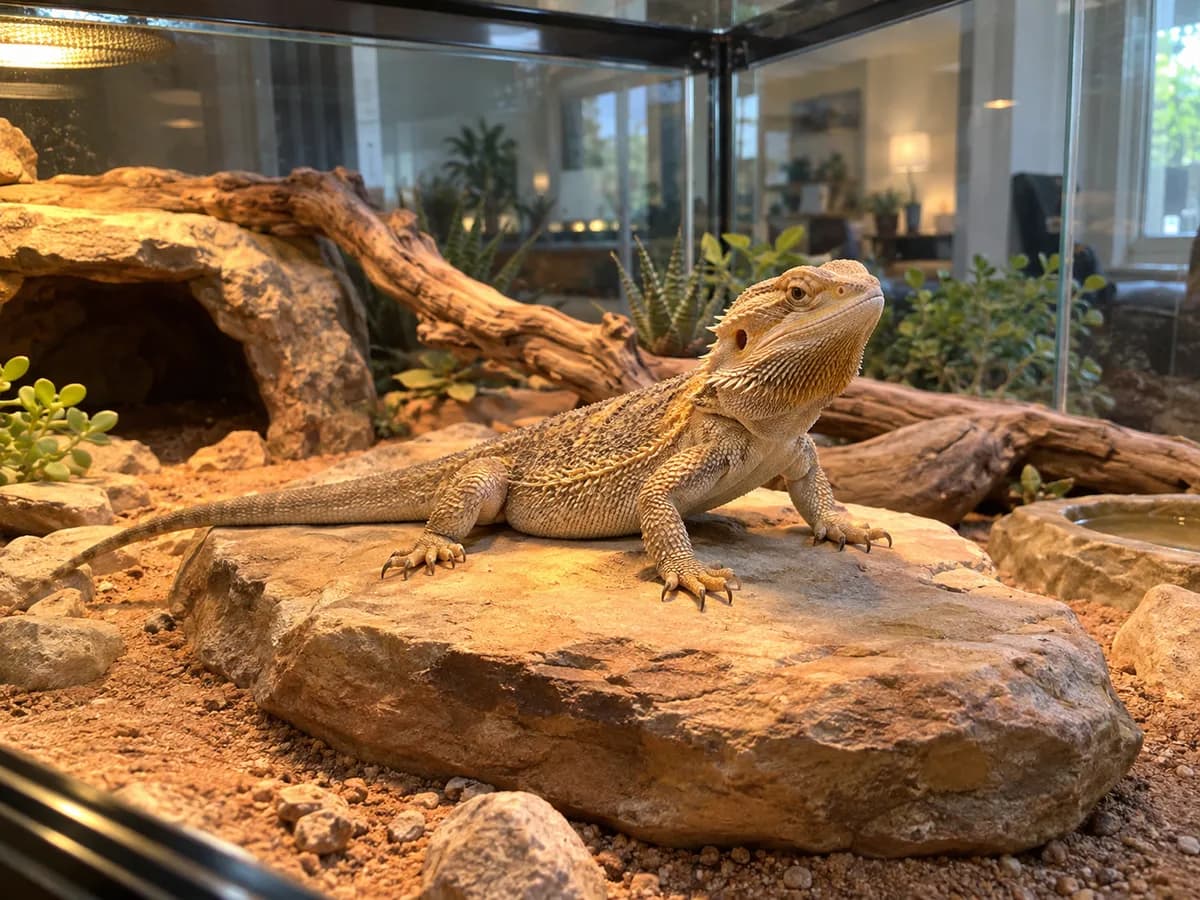
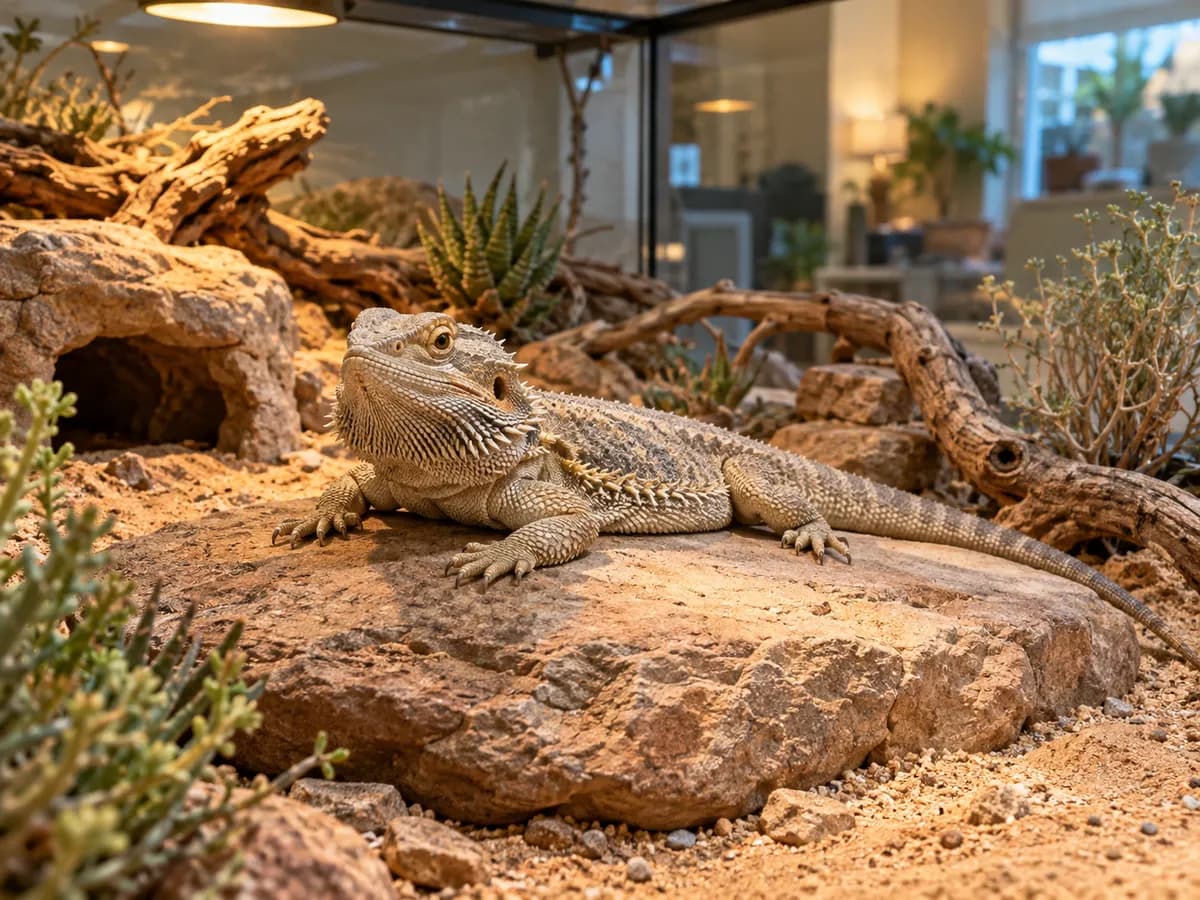
- Size: An adult bearded dragon needs a large vivarium where it can turn around, move freely and climb. Small setups are only a short-term solution, even for juveniles.
- Heat gradient: There should be a basking spot at one end and a cooler area at the other. The animal regulates its own body temperature by moving between the two. Measure temperatures regularly on both the warm and cool sides with a digital thermometer.
- UVB light: Bearded dragons need UVB light to use calcium. Use a UVB lamp made for reptiles and suited to the length of the vivarium, and replace it at the intervals recommended by the manufacturer; UVB output fades over time even while the lamp still gives off light.
- Night: Lights should go off; a moderate drop in night-time temperature is natural.
Feeding routine
Bearded dragons eat both insects and plants, and the balance changes with age: growing juveniles eat more insects, while adults mostly eat fresh greens and vegetables. Insects are usually dusted with a calcium supplement; agree the type and frequency with your veterinarian. Insects should be sized to suit the animal's head.
Behavior and handling
Bearded dragons show fascinating communication such as "head bobbing", "arm waving" and puffing out their beard. Most get used to being handled calmly with support over time. They are usually housed alone; keeping two dragons in the same vivarium can lead to stress and fighting.
A winter-rest period (brumation)
Some bearded dragons become less active and eat less at certain times of year. This can be a natural process, but it is important to consult your veterinarian before and during this period to assess the animal's condition.
Frequently asked questions
How long do bearded dragons live?
With good care, typically 8–12 years, sometimes longer.
Can sunlight through a window replace UVB?
No. Window glass blocks most UVB rays; a dedicated UVB lamp is needed.
Are bearded dragons social?
They can get used to their people, but they generally prefer to live apart from others of their kind.
Good to know
The most important points.
- Measure, don't guessHeat and UVB settings depend on your equipment and room conditions. Review your setup with a veterinarian or specialist experienced with reptiles.
- When to contact a vetSigns of discomfort in reptiles can be noticed late. If you see a change in appetite, activity or appearance, contact a veterinarian experienced with reptiles.
Life stages
Approximate age ranges for Bearded dragon and the priorities of each stage.
Similar animals
Other animals in the same group.
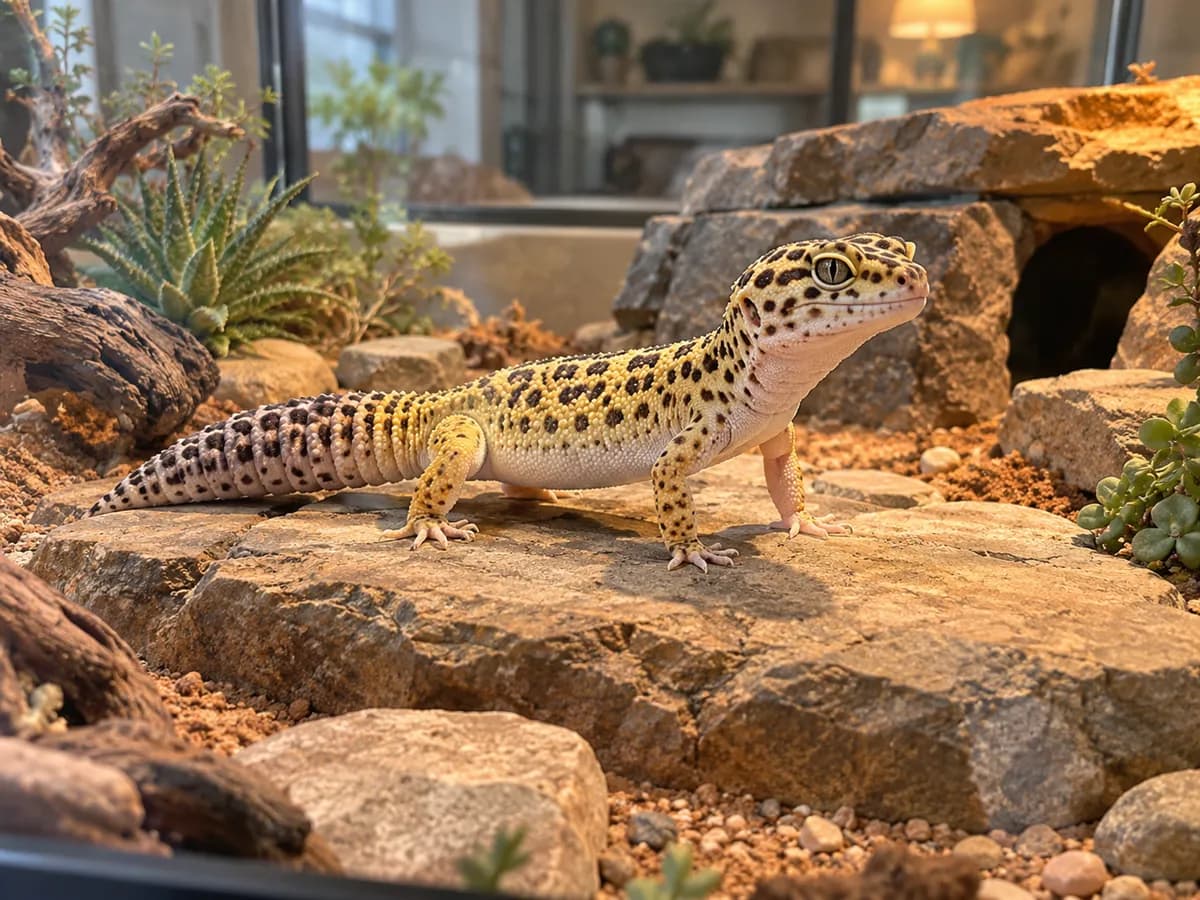 Leopard geckoWith their spotted patterns and calm temperament, leopard geckos can live for many years in a well-built vivarium. Warm, cool and humid hides are the foundation of their care.Explore
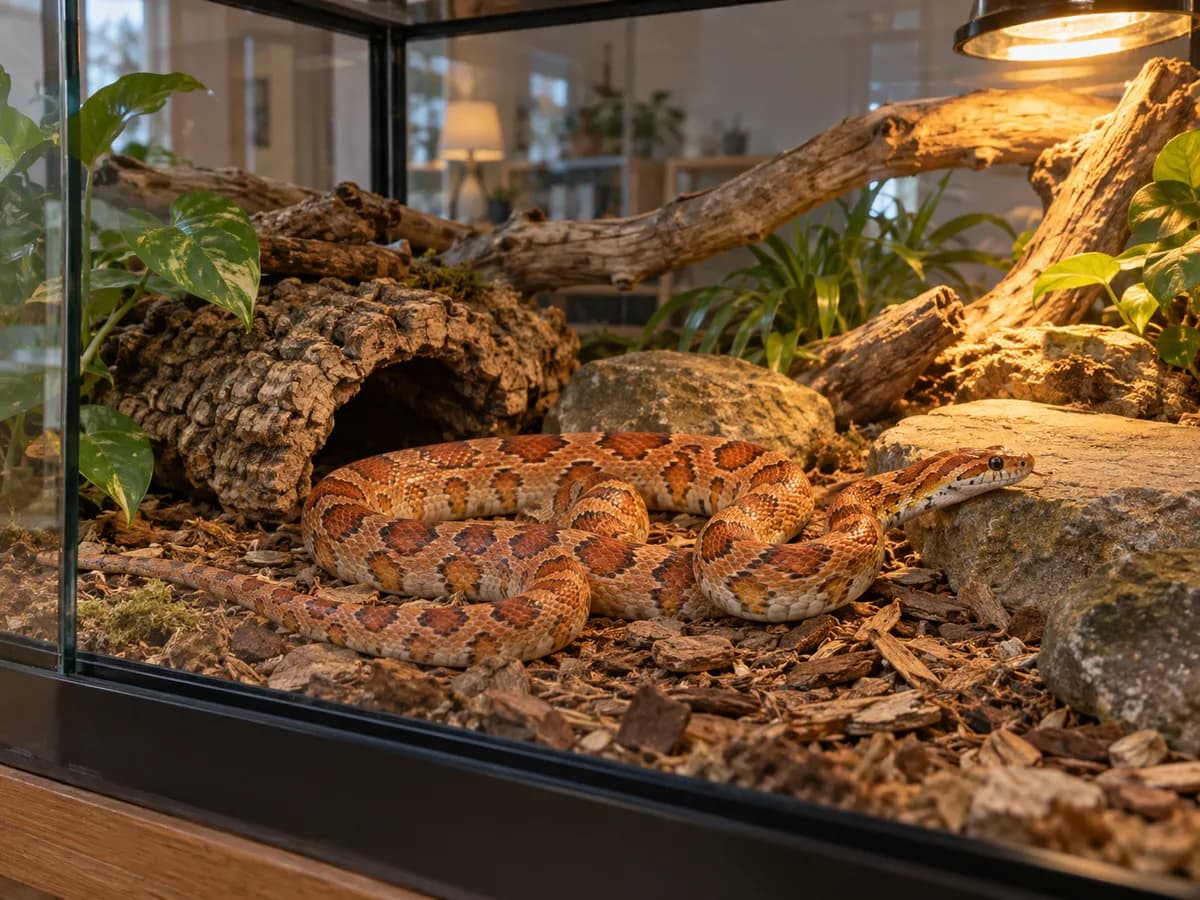 Corn snakeCalm and a manageable size, corn snakes are a popular reptile from North America. An escape-proof enclosure, the right temperature layout and regular but infrequent meals are their basic needs.Explore
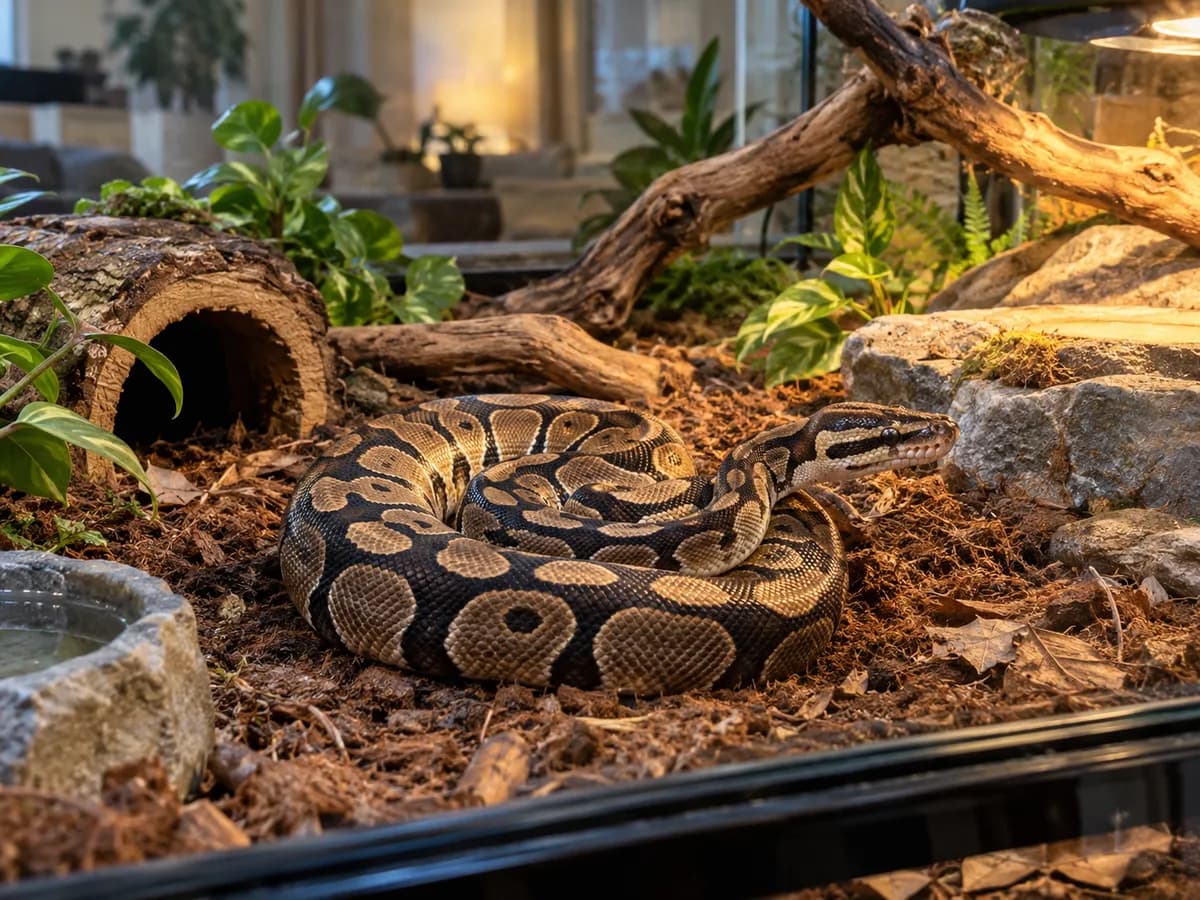 Ball pythonNative to West and Central Africa, ball pythons are known for their calm temperament and their habit of curling into a ball when threatened. They need snug hides, steady heat and humidity, and a patient feeding routine.Explore
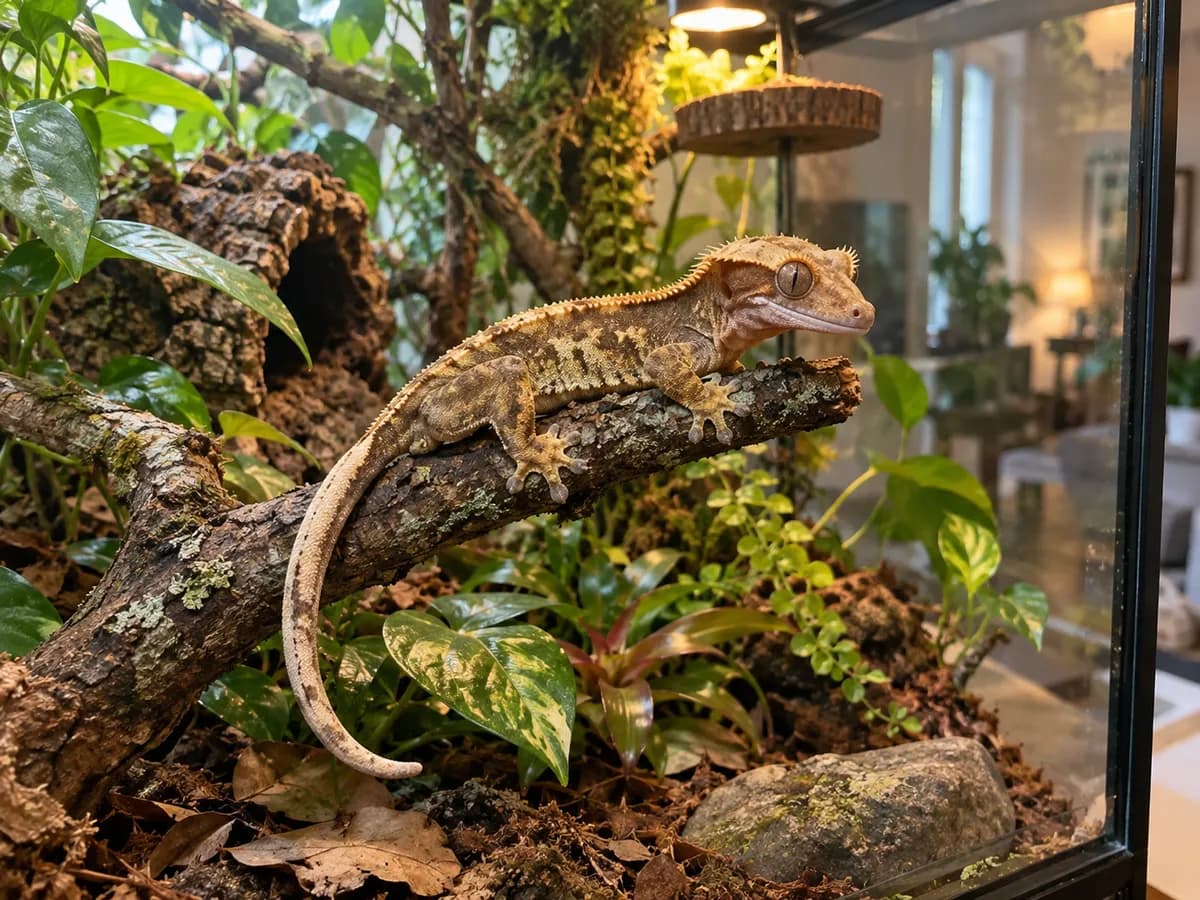 Crested geckoFrom the rainforests of New Caledonia, crested geckos are recognized by the eyelash-like crests above their eyes. They need a tall, planted enclosure, mild temperatures and a regular humidity routine.Explore
Happier together
Create a free profile for your companion.
Enter the date of birth or an estimated age to see its life stage, weight history and matching guides in one place.
- Life-stage tracking
- Weight history
- Guides for its species
- Free account