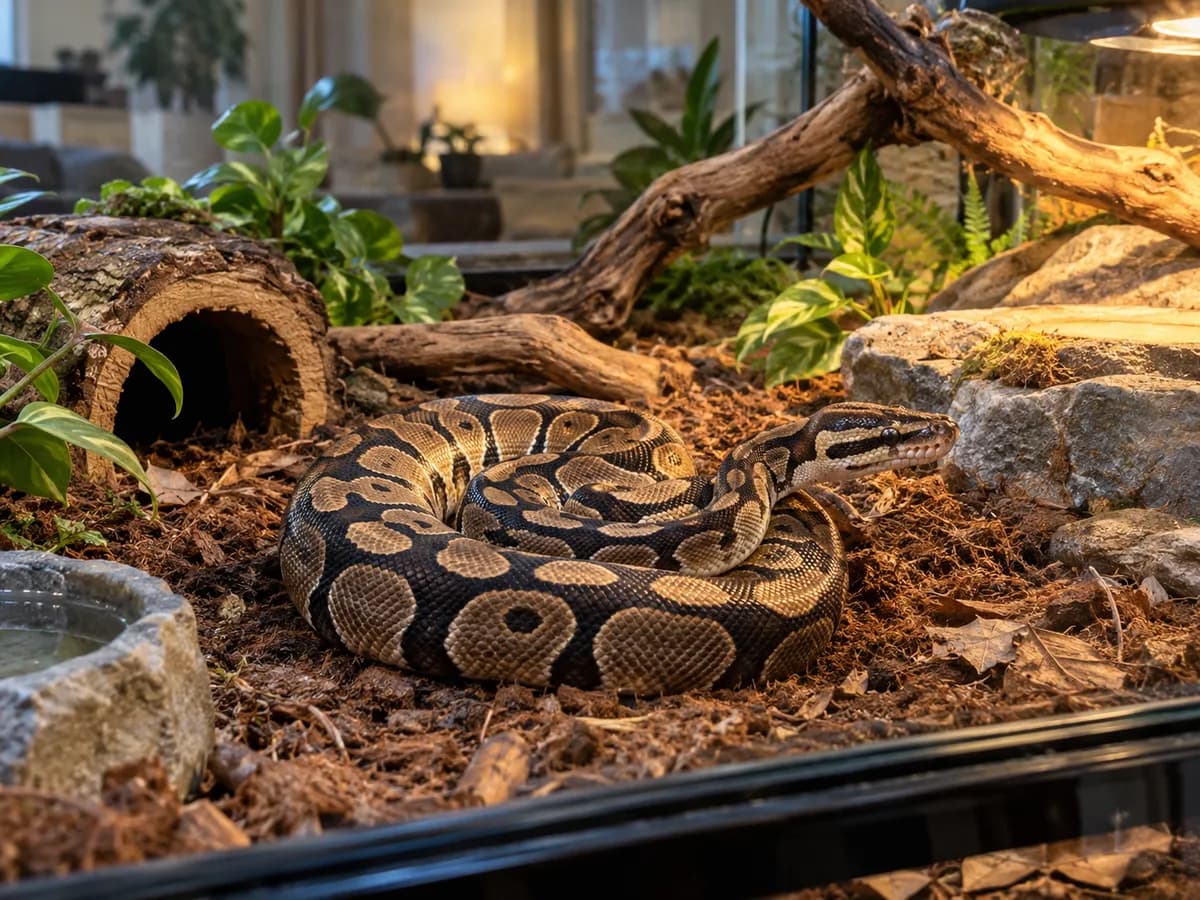
- Typical lifespan
- 20–30 years
- Social needs
- Prefers to live alone
- Active hours
- Active at night
- Experience level
- Needs some experience
Values are typical ranges and vary with breed, husbandry and the individual animal.
Quick care summary
The care essentials for Ball pythons.
- Nature and behaviorThey are calm and slow-moving, but can be timid in new surroundings.
- Living spaceThey need a secure, well-ventilated enclosure suited to their size.
- Feeding routineThey are carnivores and eat appropriately sized frozen-thawed rodents.
- Care notesQuiet setting: Keep the enclosure away from busy, noisy areas.
In depth
In short
- Shy but usually calm snakes; when startled they hide their head and curl into a ball.
- Snug hides are essential for them to feel secure.
- They need a warm–cool temperature layout and suitable humidity.
- They eat frozen-thawed rodents and are known to refuse food from time to time.
- They can live 20–30 years, a very long-term commitment.
Ball pythons are medium-sized, non-venomous snakes from the grasslands and open woodlands of West and Central Africa. They spend most of the day hidden in burrows and become active at dusk and at night.
Nature and behavior
They are calm and slow-moving, but can be timid in new surroundings. When they feel threatened they tuck their head inside their coils and form a ball, which gives them their name. A new python is best left completely unhandled for a few days to settle in. They are solitary animals.
Living space
They need a secure, well-ventilated enclosure suited to their size. The warm and cool ends should each have a hide that fits the snake's body snugly; large open spaces can make them uneasy. Heaters run through a thermostat, and temperature and humidity are checked regularly. Humidity is especially important during shedding.
Feeding routine
They are carnivores and eat appropriately sized frozen-thawed rodents. Adults eat less often than juveniles. Ball pythons may refuse food for a while, especially in cooler seasons or before a shed; if their weight and overall condition are fine, this is often normal behavior. Fresh water should always be available.
Care notes
- Quiet setting: Keep the enclosure away from busy, noisy areas.
- Weighing: Monthly weigh-ins make it easier to judge overall condition when appetite fluctuates.
- Shedding: The skin should come off in one piece; a humid hide helps.
- Hygiene: Remove waste promptly and wash your hands after handling.
Good to know
The most important points.
- When to contact a vetIf you notice a long refusal to eat together with weight loss, anything unusual around the mouth or with breathing, or patchy sheds, contact a veterinarian experienced with reptiles.
Similar animals
Other animals in the same group.
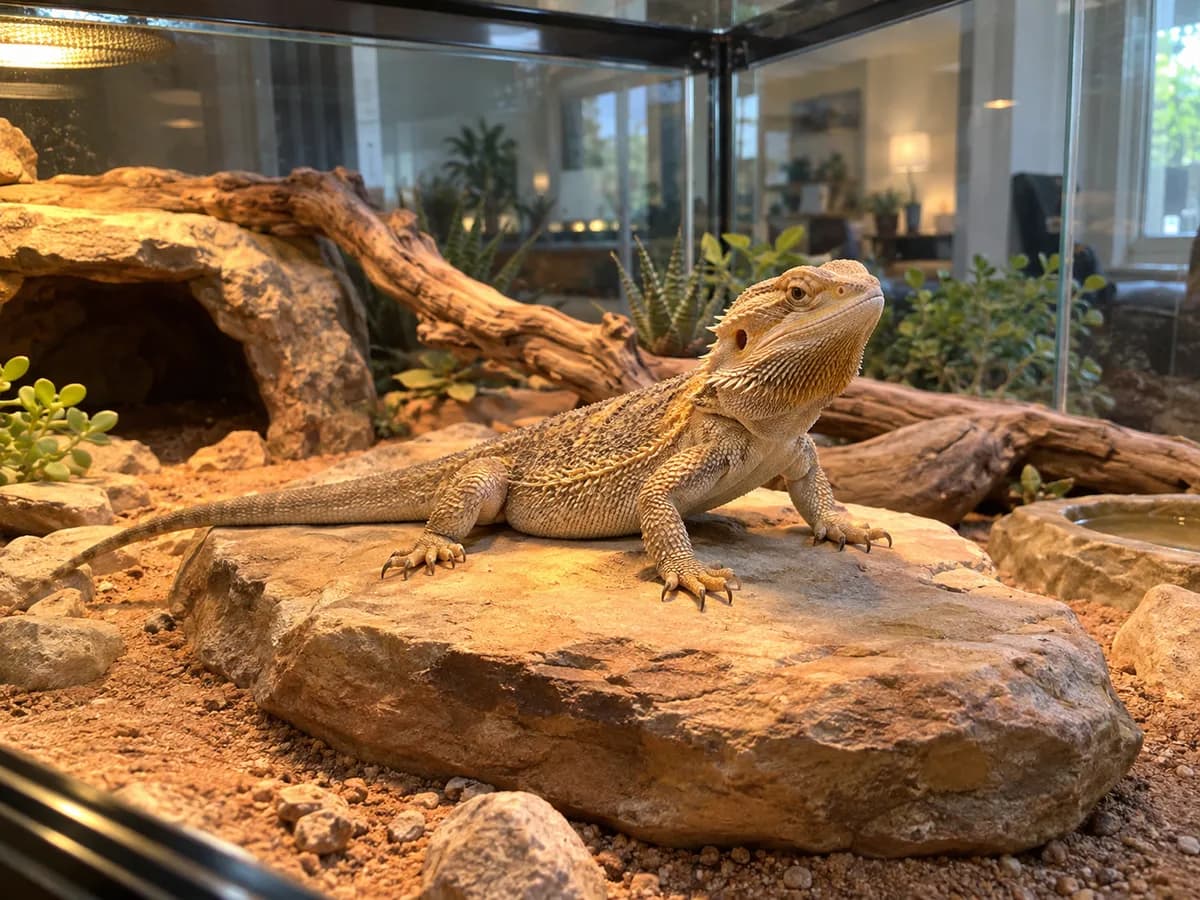 Bearded dragonCalm, curious and active by day, bearded dragons are delightful reptiles in a well-built vivarium. At the heart of their care are the right heat, the right UVB light and an age-appropriate diet.Explore
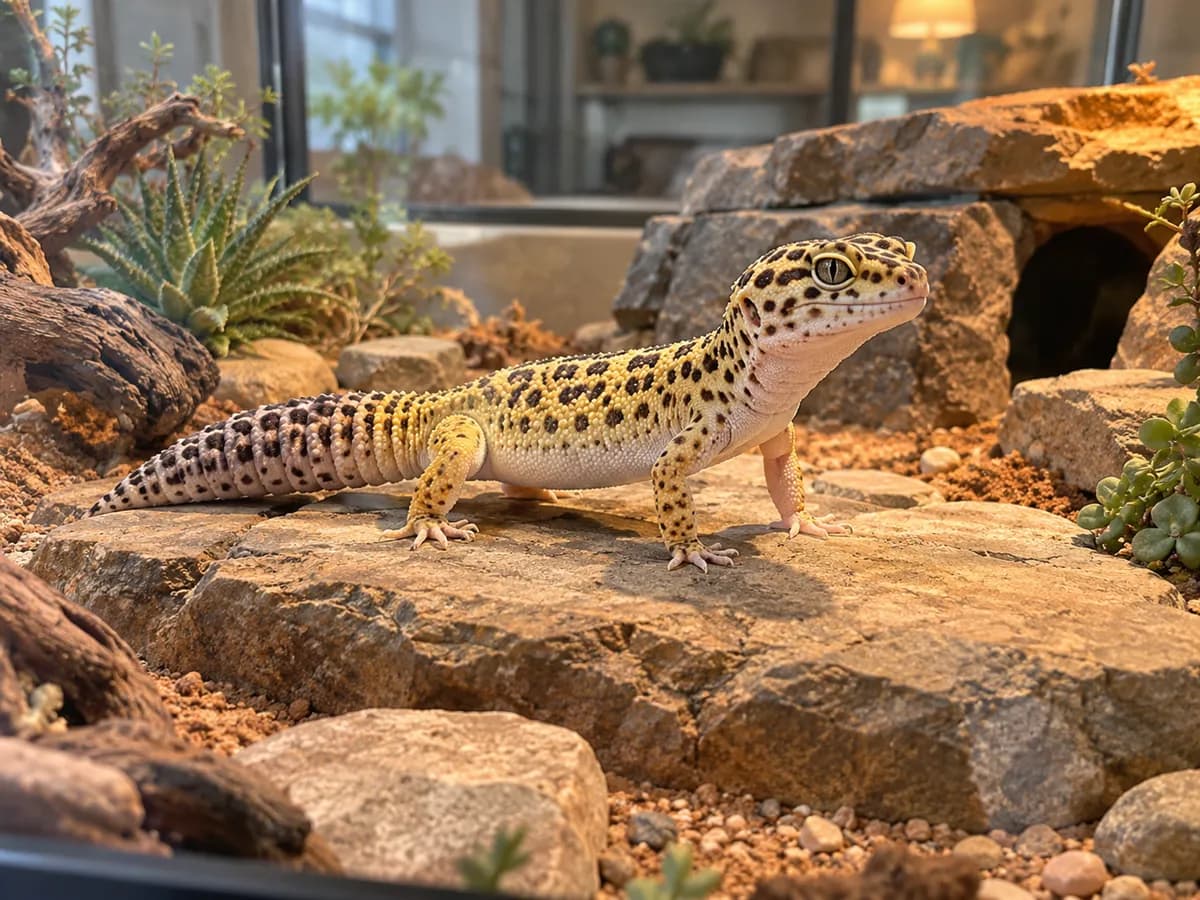 Leopard geckoWith their spotted patterns and calm temperament, leopard geckos can live for many years in a well-built vivarium. Warm, cool and humid hides are the foundation of their care.Explore
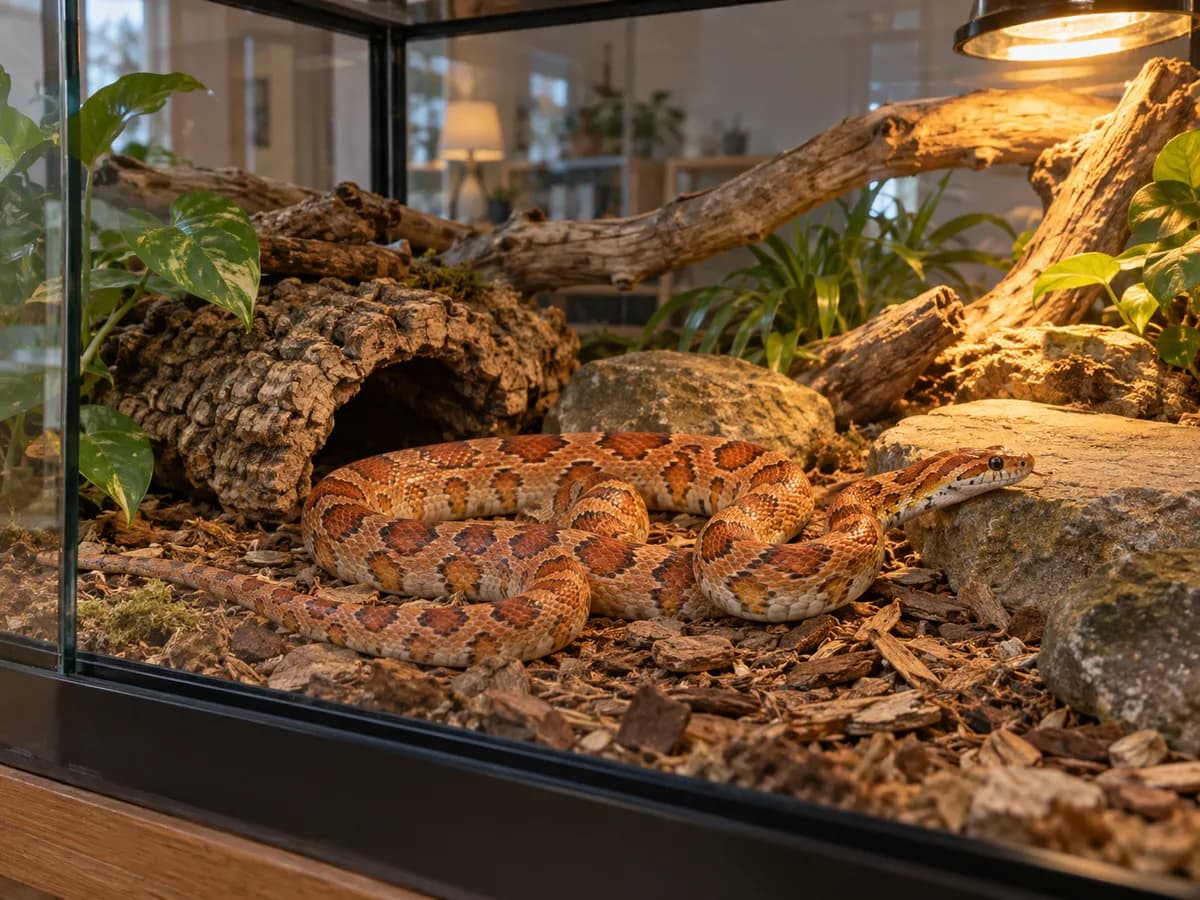 Corn snakeCalm and a manageable size, corn snakes are a popular reptile from North America. An escape-proof enclosure, the right temperature layout and regular but infrequent meals are their basic needs.Explore
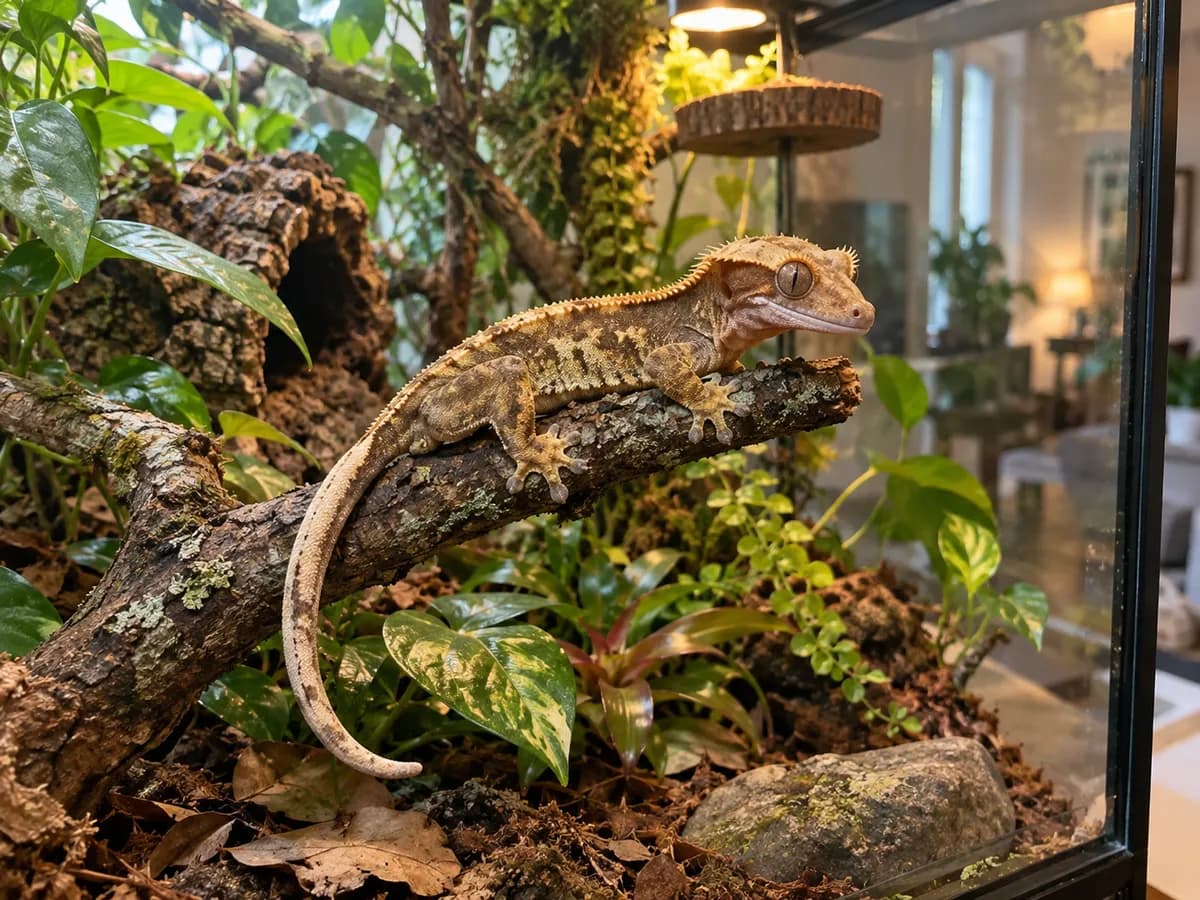 Crested geckoFrom the rainforests of New Caledonia, crested geckos are recognized by the eyelash-like crests above their eyes. They need a tall, planted enclosure, mild temperatures and a regular humidity routine.Explore
Happier together
Create a free profile for your companion.
Enter the date of birth or an estimated age to see its life stage, weight history and matching guides in one place.
- Life-stage tracking
- Weight history
- Guides for its species
- Free account