

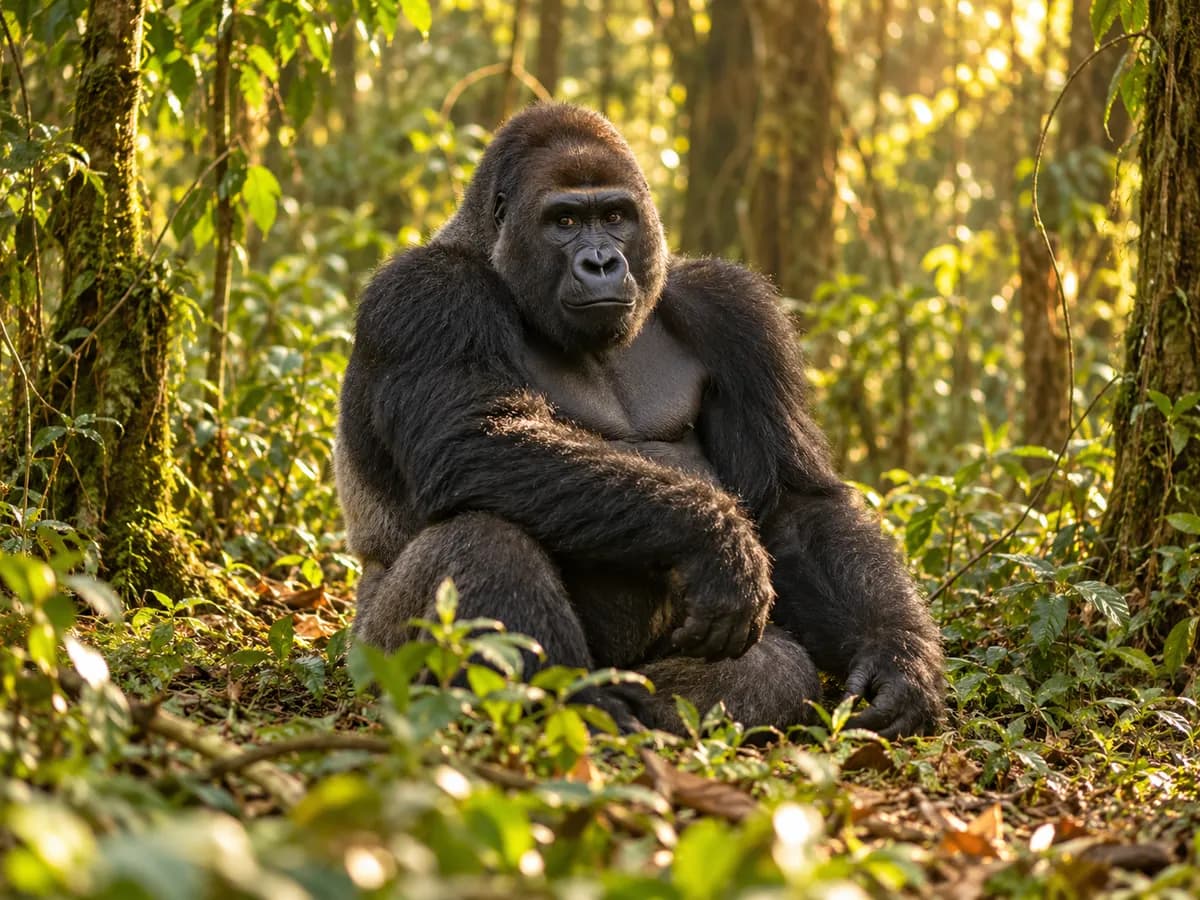
- Height
- 1.3–1.8 m
- Weight
- 70–230 kg
- Lifespan in the wild
- 35–40 years
- Conservation status (IUCN)
- Critically endangered (CR)
Figures are approximate for adults and vary by sex, subspecies and population.
At a glance
The key facts about Gorillas.
- Where does it live?Gorillas live in the rainforests of Central Africa.
- What does it eat?Gorillas are mostly herbivores that eat leaves, stems, pith, shoots and fruit.
- Behaviour and social lifeA gorilla group usually consists of one silverback male, several females and their young.
- YoungPregnancy lasts about 8.5 months and usually a single infant is born.
In depth
In short
- Gorillas are the largest living primates.
- There are two species: the western gorilla and the eastern gorilla.
- Groups are led by an adult male called a "silverback" after the silver hair on his back.
- Their diet is mostly plants such as leaves, stems and fruit.
- Both species are listed as Critically Endangered by the IUCN.
Gorillas are the largest members of the great apes, the group that shares a common ancestor with humans. There are two species: the western gorilla (Gorilla gorilla) and the eastern gorilla (Gorilla beringei), which includes mountain gorillas. Despite their powerful appearance, they are usually calm and peaceful animals.
Where does it live?
Gorillas live in the rainforests of Central Africa. Western gorillas are found in the lowland forests of Cameroon, Gabon, Congo and nearby countries; eastern gorillas live in lowland and mountain forests in the Democratic Republic of the Congo, Rwanda and Uganda.
What does it eat?
Gorillas are mostly herbivores that eat leaves, stems, pith, shoots and fruit. Western gorillas eat more fruit. Insects such as ants and termites make up a small part of their diet.
Behaviour and social life
A gorilla group usually consists of one silverback male, several females and their young. The silverback decides where the group goes and protects it from threats. Every evening gorillas build a fresh nest of leaves and branches. Chest-beating is used for long-distance communication and to impress rivals.
Young
Pregnancy lasts about 8.5 months and usually a single infant is born. It is carried on its mother's chest for the first months, then on her back, and stays with her for several years.
Conservation status
Both gorilla species are listed as Critically Endangered (CR) on the IUCN Red List. Hunting for bushmeat, deforestation, mining and diseases such as Ebola are the biggest threats. Thanks to intensive conservation work, mountain gorilla numbers have grown in recent years.
Fun facts
- A gorilla's nose print is unique to each individual, like a human fingerprint.
- Gorillas rarely drink water because they get moisture from plants.
- Some gorillas have been seen using simple tools, such as a stick to test water depth.
Similar animals
Other animals in the same group.
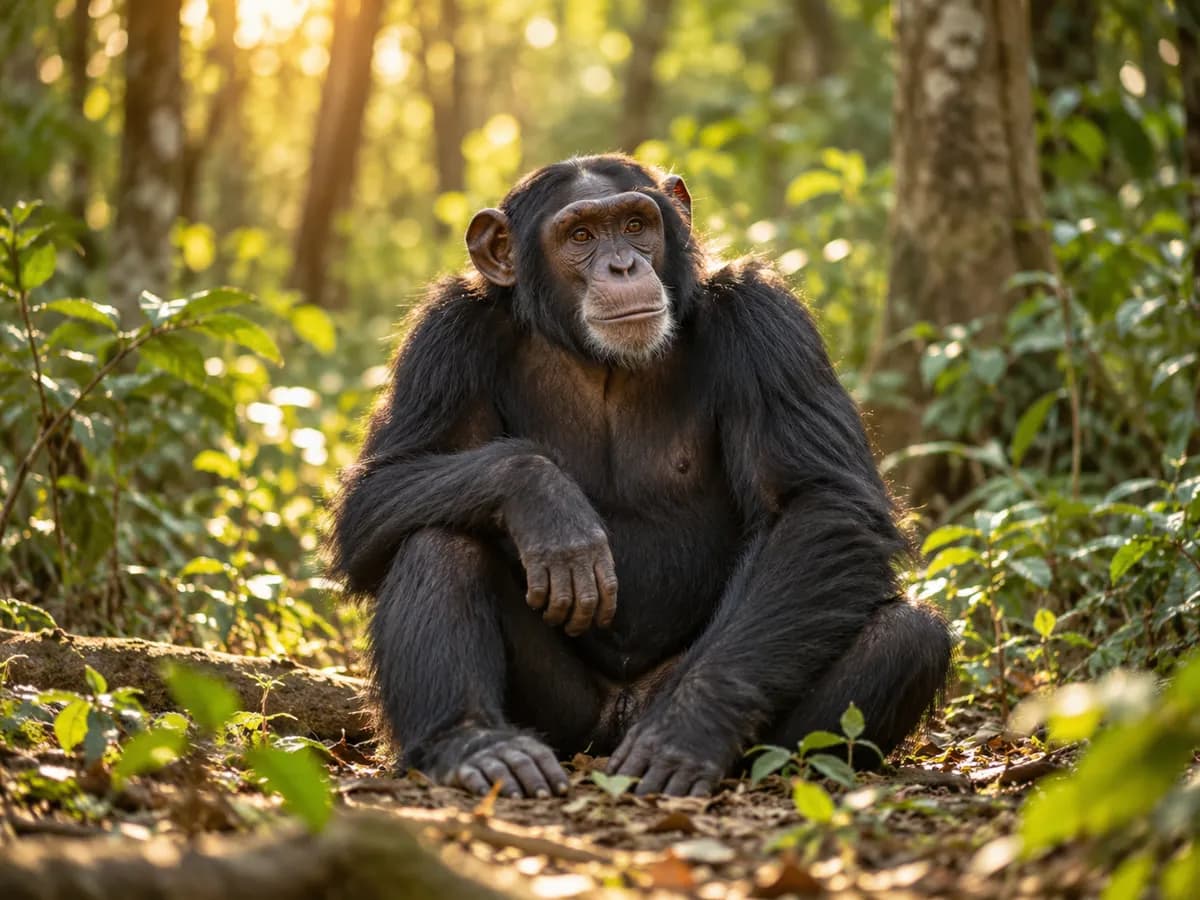 ChimpanzeeOne of humanity's closest living relatives, the chimpanzee is known for its tool use, complex society and ability to learn. It lives in Africa's forests and is endangered.Explore
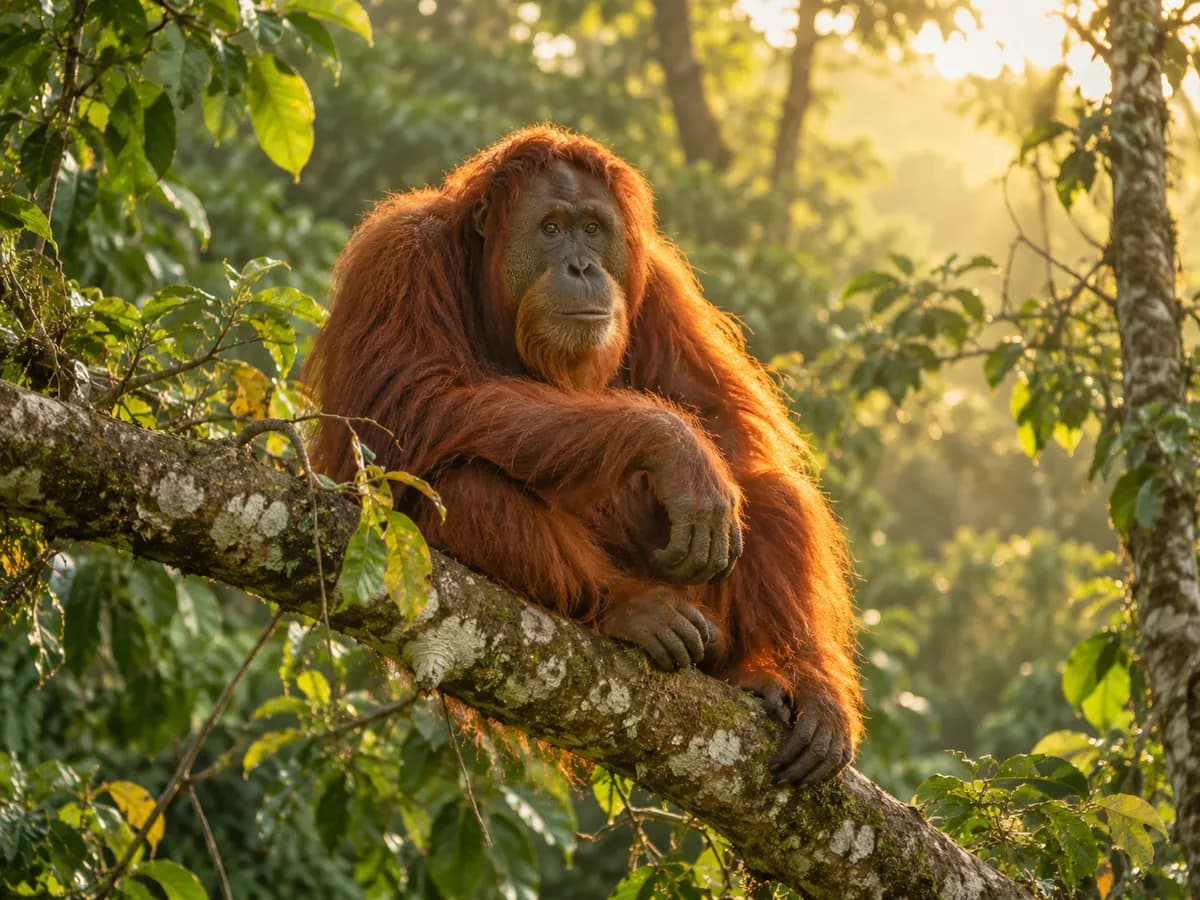 OrangutanSpending most of its life in the trees, the orangutan is the largest tree-dwelling mammal in the world. All three species, which live in the rainforests of Borneo and Sumatra, are critically endangered.Explore
Respect for nature, stronger tomorrows
Protecting wildlife is everyone's responsibility.
If you find an injured or young wild animal, don't touch it; inform your local wildlife authority. More knowledge, more awareness.
- Respect natural habitats
- Watch wild animals from afar
- Leave no litter in nature
- Support a sustainable future