
- Height
- 1–1.5 m
- Weight
- 30–70 kg
- Lifespan in the wild
- 30–50 years
- Conservation status (IUCN)
- Endangered (EN)
Figures are approximate for adults and vary by sex, subspecies and population.
At a glance
The key facts about Chimpanzees.
- Where does it live?It lives in the rainforests, wooded savannas and montane forests of West and Central Africa, in fragmented populations across an area stretching from…
- What does it eat?It is an omnivore whose diet is mostly fruit.
- Behaviour and social lifeChimpanzees live in communities of dozens of individuals, but members split into smaller parties during the day and later rejoin.
- YoungPregnancy lasts about eight months and usually a single infant is born.
In depth
In short
- Together with bonobos, chimpanzees are humans' closest living relatives.
- They use tools such as twigs to fish for termites and stones to crack nuts.
- They live in communities of dozens of individuals.
- Different communities can develop different behavioural "traditions".
- The IUCN lists them as Endangered; habitat loss, hunting and disease are the main threats.
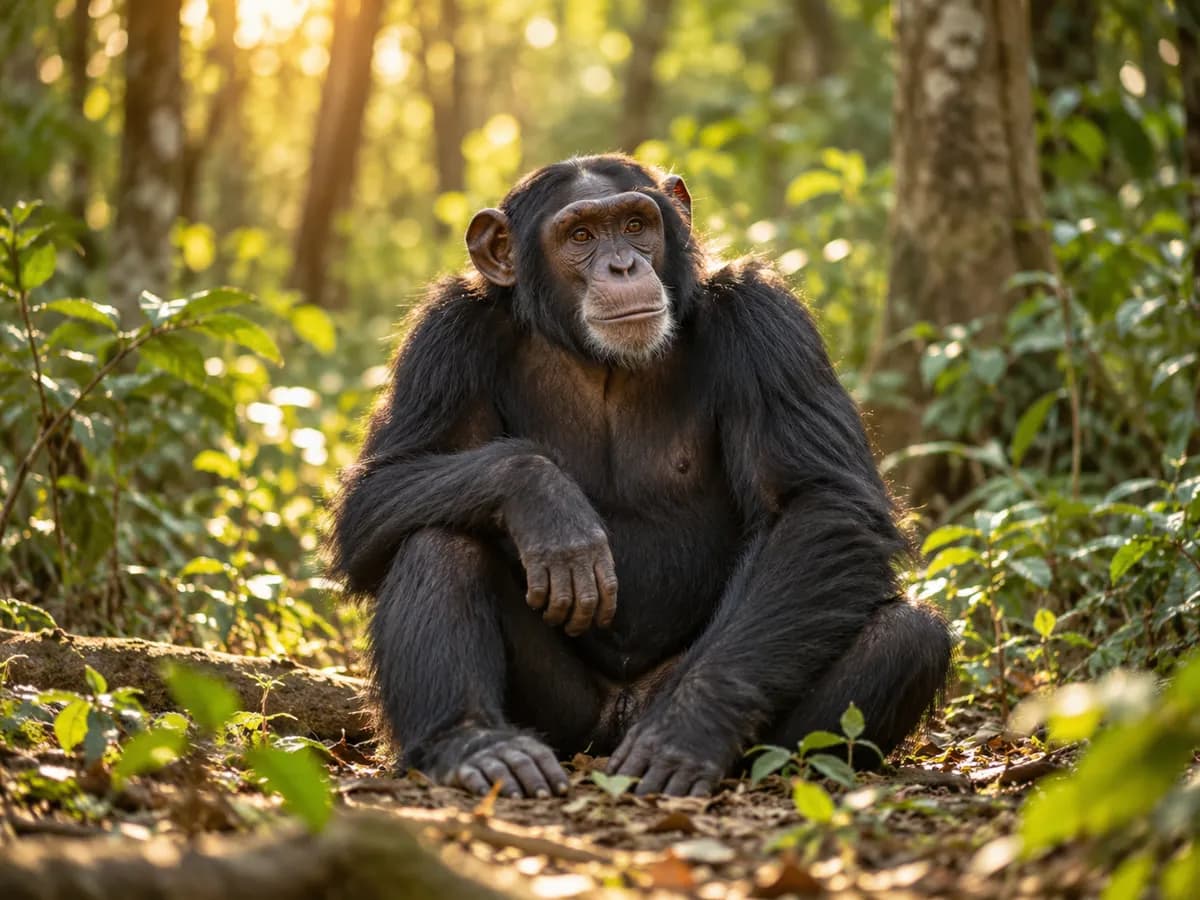
The chimpanzee (Pan troglodytes) is an intelligent great ape that shares a common ancestor with humans. Along with the bonobo, it is considered our closest living relative. It communicates richly with facial expressions, calls and gestures.
Where does it live?
It lives in the rainforests, wooded savannas and montane forests of West and Central Africa, in fragmented populations across an area stretching from Guinea to Tanzania.
What does it eat?
It is an omnivore whose diet is mostly fruit. It also eats leaves, seeds, flowers and insects. Some communities hunt small mammals such as monkeys in groups.
Behaviour and social life
Chimpanzees live in communities of dozens of individuals, but members split into smaller parties during the day and later rejoin. Communities have a hierarchy among males. Grooming each other is an important way to strengthen social bonds. Chimpanzees use tools: twigs to fish termites out of mounds, stones to crack nuts and leaves to soak up water. These skills differ from community to community and are learned by the young through observation.
Young
Pregnancy lasts about eight months and usually a single infant is born. It nurses for several years and stays with its mother for many years.
Conservation status
The chimpanzee is listed as Endangered (EN) on the IUCN Red List. Deforestation, mining, hunting for bushmeat, the illegal pet trade and diseases that can spread from humans are the main threats.
Fun facts
- Jane Goodall's observations in Tanzania showed the world that chimpanzees make and use tools.
- Chimpanzees can recognise themselves in a mirror.
- Some communities perform dramatic displays, called "rain dances", when rain begins.
Similar animals
Other animals in the same group.
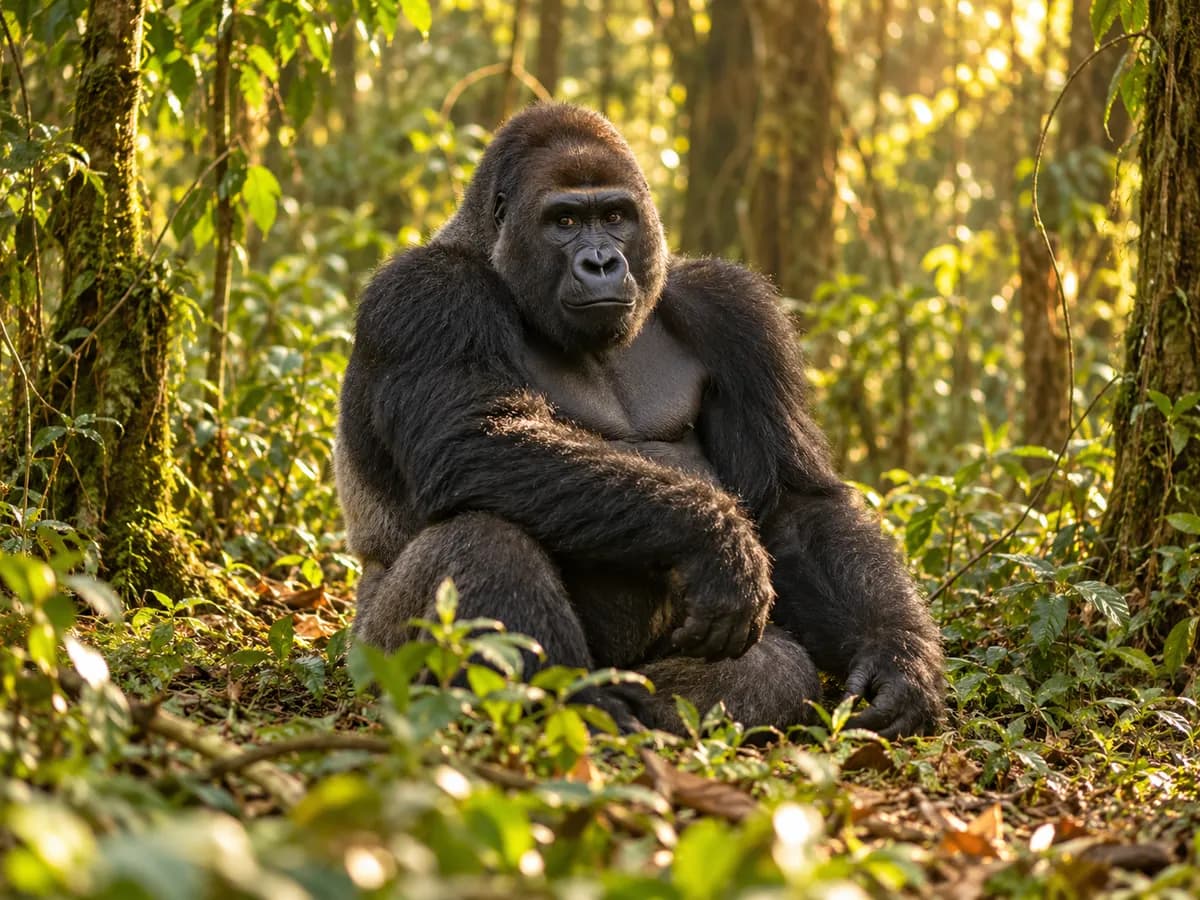 GorillaThe largest of the primates, gorillas are known for their calm nature and strong family bonds. Both species, which live in Africa's rainforests, are critically endangered.Explore
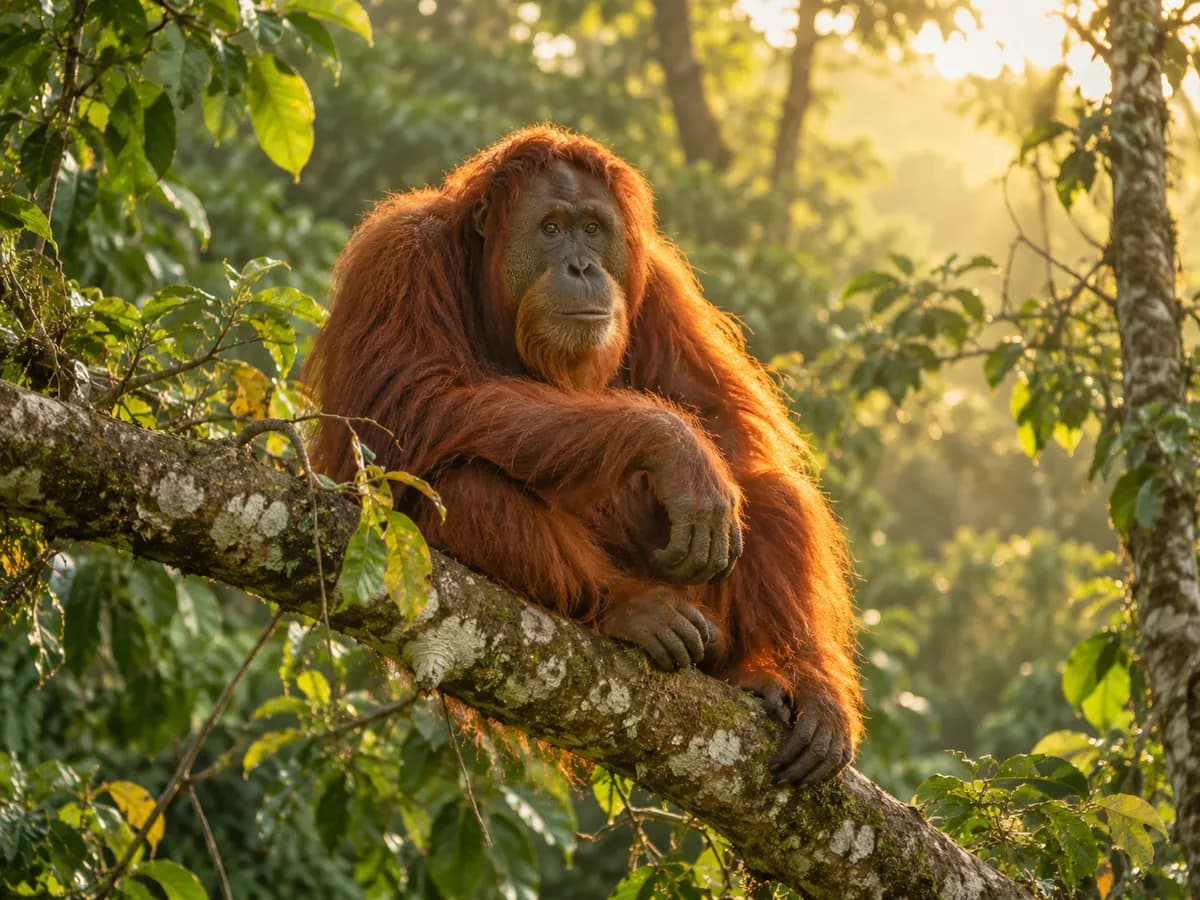 OrangutanSpending most of its life in the trees, the orangutan is the largest tree-dwelling mammal in the world. All three species, which live in the rainforests of Borneo and Sumatra, are critically endangered.Explore
Respect for nature, stronger tomorrows
Protecting wildlife is everyone's responsibility.
If you find an injured or young wild animal, don't touch it; inform your local wildlife authority. More knowledge, more awareness.
- Respect natural habitats
- Watch wild animals from afar
- Leave no litter in nature
- Support a sustainable future