

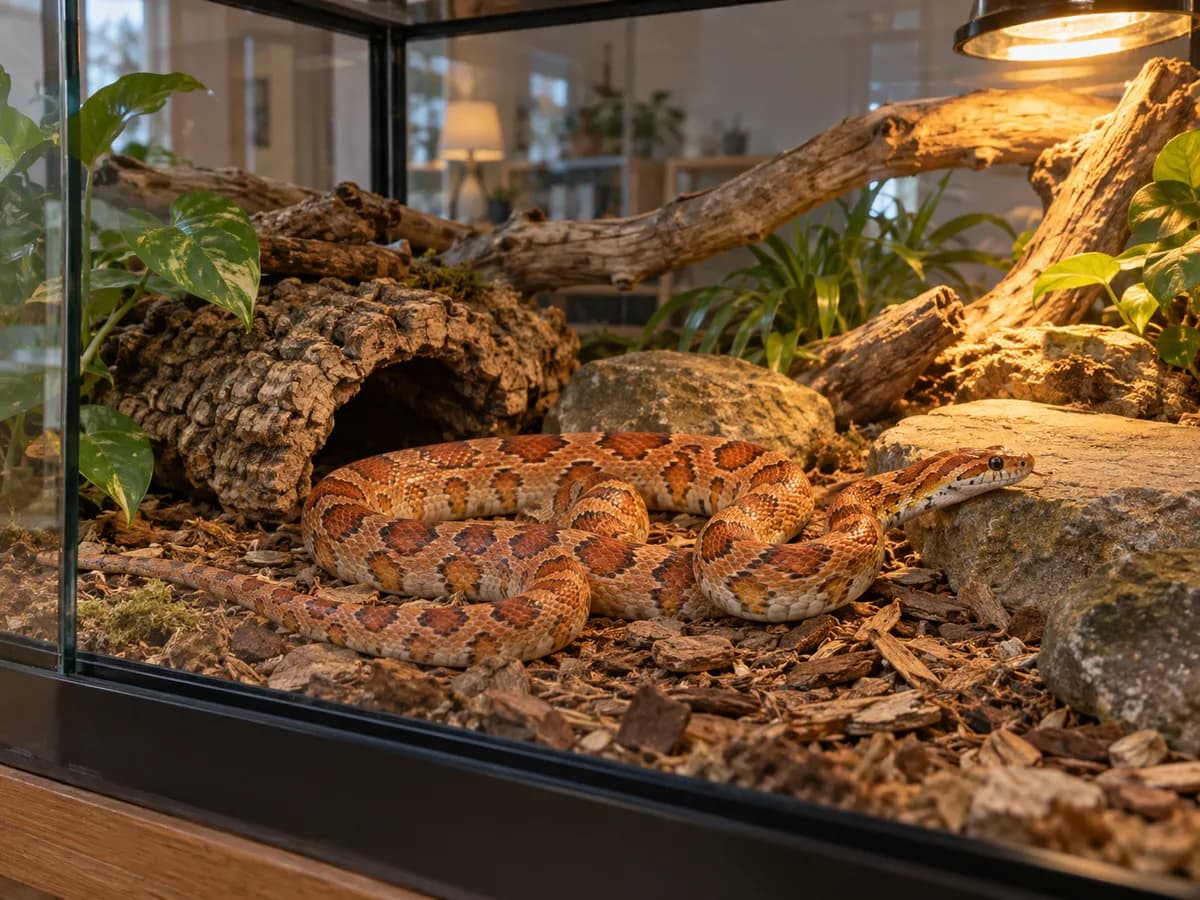
- Typical lifespan
- 15–20 years
- Social needs
- Prefers to live alone
- Active hours
- Active at dawn and dusk
- Experience level
- Suitable for beginners
Values are typical ranges and vary with breed, husbandry and the individual animal.
Quick care summary
The care essentials for Corn snakes.
In depth
In short
- Corn snakes are generally calm, slow-moving and well suited to gentle handling.
- They are skilled escape artists; a lockable enclosure is essential.
- A warm side and a cool side let them regulate their own body temperature.
- They eat appropriately sized frozen-thawed rodents at infrequent intervals.
- They can live 15–20 years or longer, so they are a long-term commitment.
Corn snakes are non-venomous snakes from the woodlands, fields and abandoned buildings of the southeastern United States. They come in a very wide range of colors and patterns and are most active at dusk and at night.
Nature and behavior
They are usually docile and curious. A newly arrived snake is best left alone for a few days to settle in. Short, calm handling sessions build trust; many keepers avoid handling for a day or two after a meal. They are solitary and do not need a companion.
Living space
They need a secure, well-ventilated enclosure that grows with the snake. Create a warm end and a cool end, with a hide in each. Heaters must always run through a thermostat, and temperatures should be checked with a thermometer. Climbing branches, a substrate they can burrow in and a clean water bowl complete the setup.
Feeding routine
Corn snakes are carnivores. The common, safe practice is to offer frozen-thawed rodents no wider than the widest part of the snake's body. Young snakes eat more often, adults less often. Live prey is not recommended because it can injure the snake. Fresh water should always be available.
Care notes
- Escape-proofing: Check lids and locks regularly.
- Shedding: Cloudy eyes before a shed are normal; handle less during this time and offer a humid hide.
- Hygiene: Remove waste promptly, change water often and wash your hands after handling.
- Records: Noting feeding and shedding dates makes it easier to spot changes in routine.
Good to know
The most important points.
- When to contact a vetReptiles may hide discomfort for a long time. If you notice a prolonged change in appetite, patchy sheds or a clear drop in activity, contact a veterinarian experienced with reptiles.
Similar animals
Other animals in the same group.
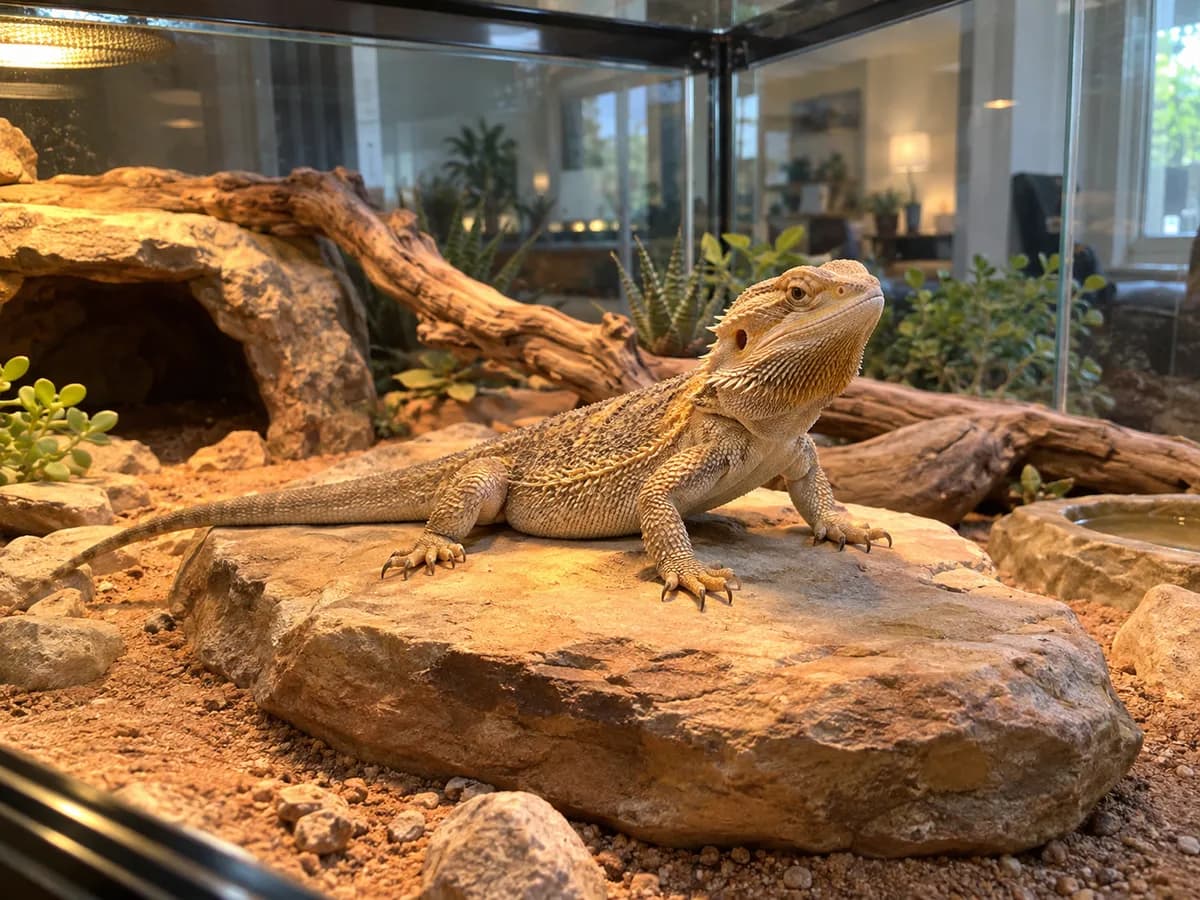 Bearded dragonCalm, curious and active by day, bearded dragons are delightful reptiles in a well-built vivarium. At the heart of their care are the right heat, the right UVB light and an age-appropriate diet.Explore
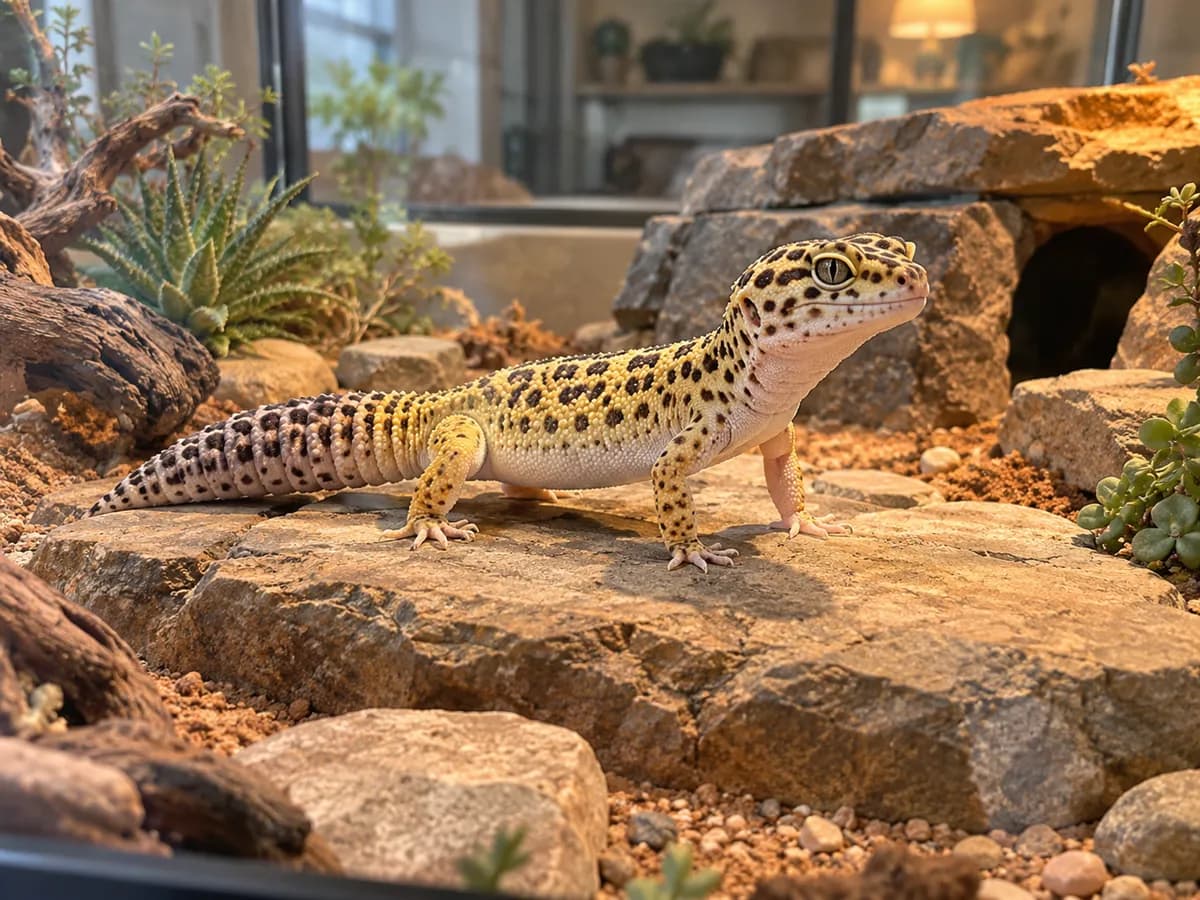 Leopard geckoWith their spotted patterns and calm temperament, leopard geckos can live for many years in a well-built vivarium. Warm, cool and humid hides are the foundation of their care.Explore
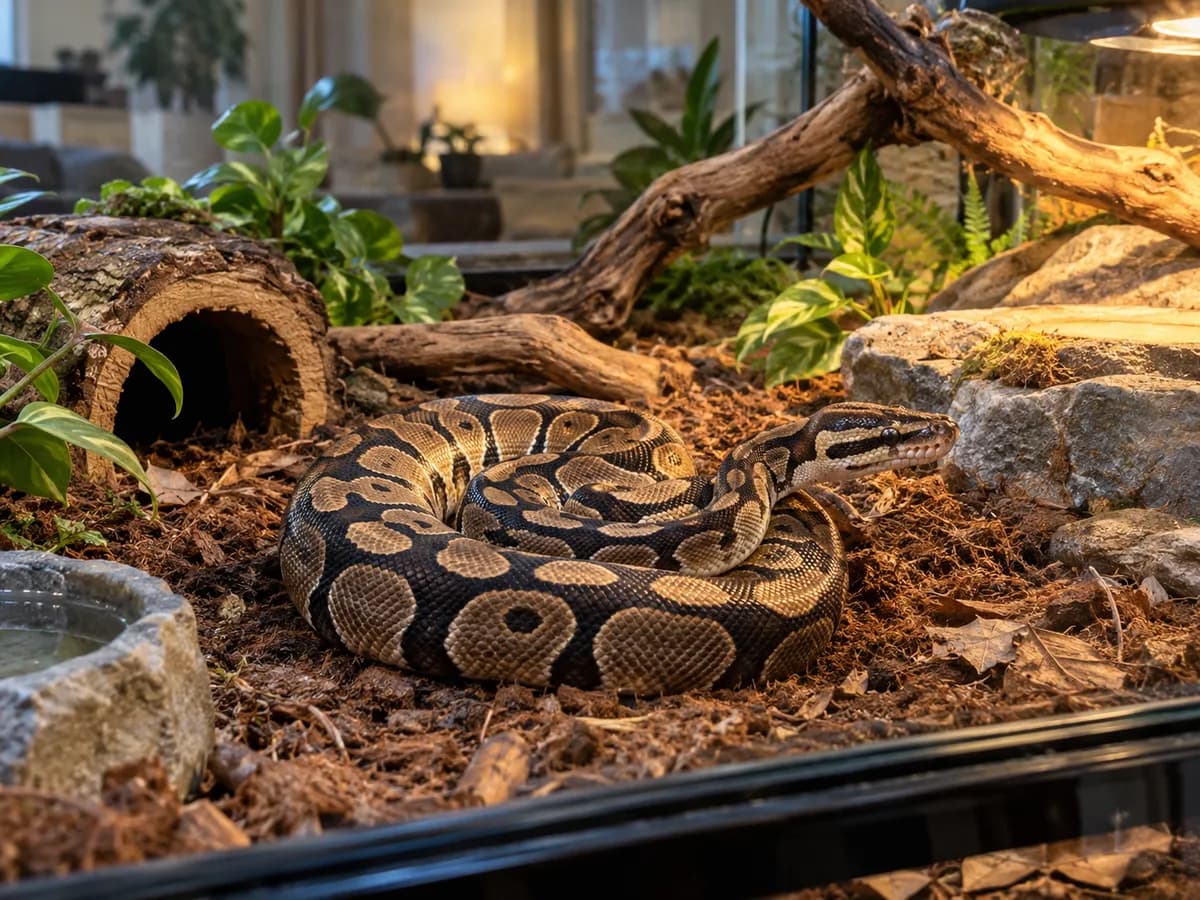 Ball pythonNative to West and Central Africa, ball pythons are known for their calm temperament and their habit of curling into a ball when threatened. They need snug hides, steady heat and humidity, and a patient feeding routine.Explore
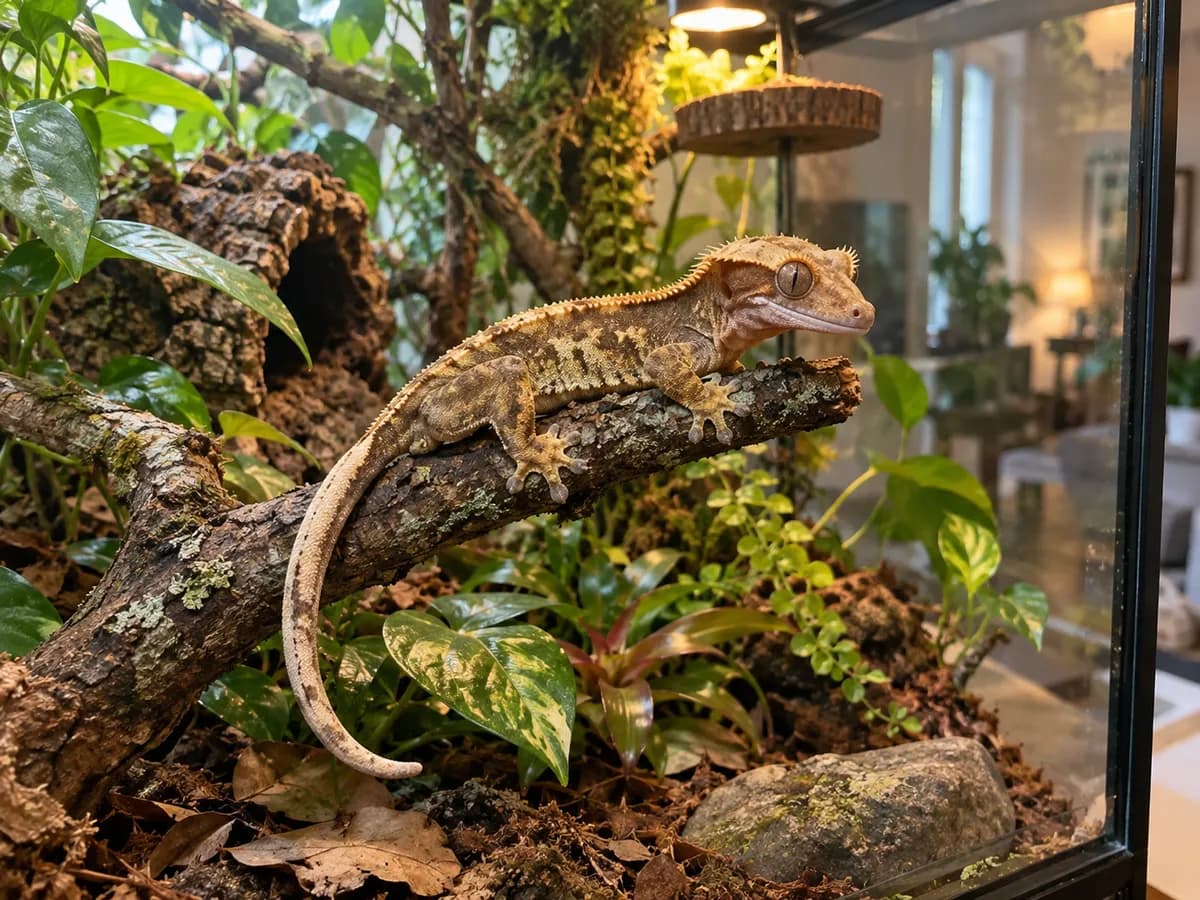 Crested geckoFrom the rainforests of New Caledonia, crested geckos are recognized by the eyelash-like crests above their eyes. They need a tall, planted enclosure, mild temperatures and a regular humidity routine.Explore
Happier together
Create a free profile for your companion.
Enter the date of birth or an estimated age to see its life stage, weight history and matching guides in one place.
- Life-stage tracking
- Weight history
- Guides for its species
- Free account