

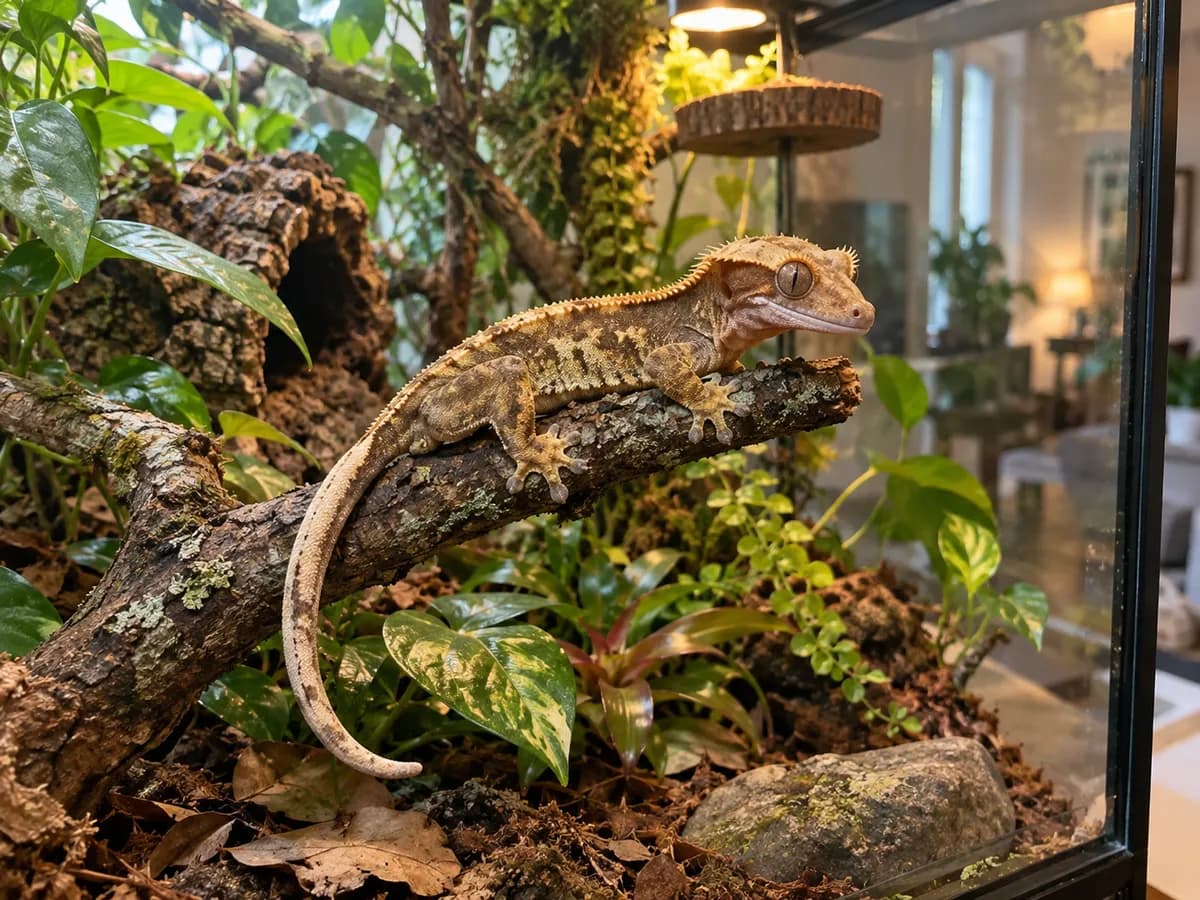
- Typical lifespan
- 15–20 years
- Social needs
- Prefers to live alone
- Active hours
- Active at night
- Experience level
- Suitable for beginners
Values are typical ranges and vary with breed, husbandry and the individual animal.
Quick care summary
The care essentials for Crested geckos.
- Nature and behaviorThey are usually calm but can make sudden jumps.
- Living spaceA vertical enclosure that is taller than it is wide is ideal.
- Feeding routineThe staple food is a complete powdered crested gecko diet mixed with water.
- Care notesHumidity cycle: Mist in the evening, let it dry during the day.
In depth
In short
- Nocturnal, tree-dwelling lizards that love to jump.
- Height and climbing space matter more than floor area.
- They like mild room temperatures and must be protected from overheating.
- A complete crested gecko diet is the staple food; insects can be offered as extras.
- They can drop their tail when frightened and it does not grow back, so never hold them by the tail.
Crested geckos are tree-dwelling lizards from the rainforests of the New Caledonia islands in the Pacific. They rest among the leaves during the day and become active in the evening and at night.
Nature and behavior
They are usually calm but can make sudden jumps. When handling, letting the gecko walk from one hand to the other ("hand walking") is a safe approach. They may drop their tail when frightened; in crested geckos the tail does not regrow, so never pick them up by it. They are usually housed alone; keeping males together can lead to fights.
Living space
A vertical enclosure that is taller than it is wide is ideal. Branches, vines and live or artificial plants provide climbing and hiding spots. They prefer mild temperatures; very hot rooms in summer are a risk. A common routine is to mist the enclosure lightly in the evening and let it dry out during the day. Temperature and humidity are tracked with gauges.
Feeding routine
The staple food is a complete powdered crested gecko diet mixed with water. Appropriately sized insects can be offered as extras. Fresh water and a misted enclosure help meet their water needs. Clear leftover food from the dish every day.
Care notes
- Humidity cycle: Mist in the evening, let it dry during the day.
- Keeping cool: Keep the enclosure away from direct sunlight and radiators.
- Weighing: Regular weigh-ins make it easier to follow growth and condition.
- Hygiene: Wash your hands after handling.
Good to know
The most important points.
- When to contact a vetIf you notice a prolonged change in appetite, weight loss, old skin stuck on the toe tips or a clear change in movement, contact a veterinarian experienced with reptiles.
Similar animals
Other animals in the same group.
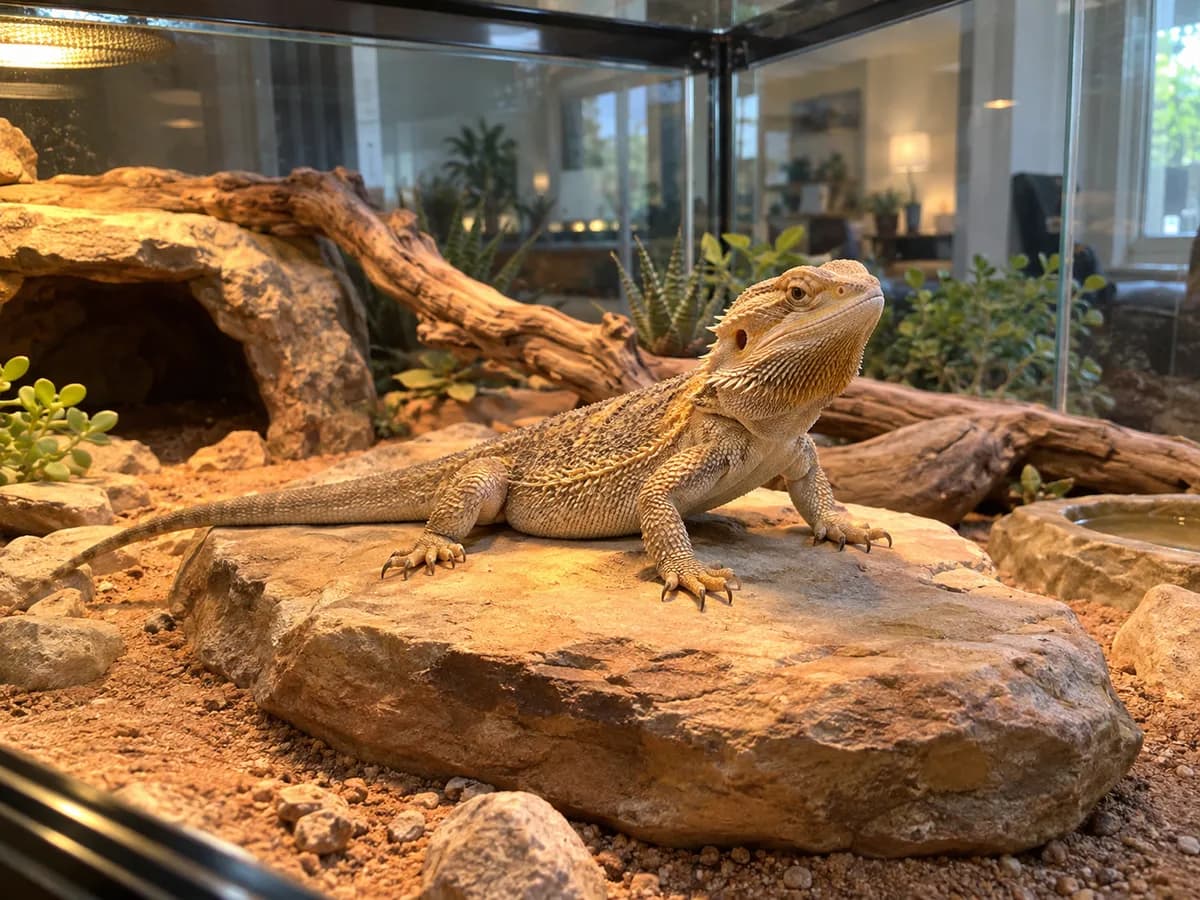 Bearded dragonCalm, curious and active by day, bearded dragons are delightful reptiles in a well-built vivarium. At the heart of their care are the right heat, the right UVB light and an age-appropriate diet.Explore
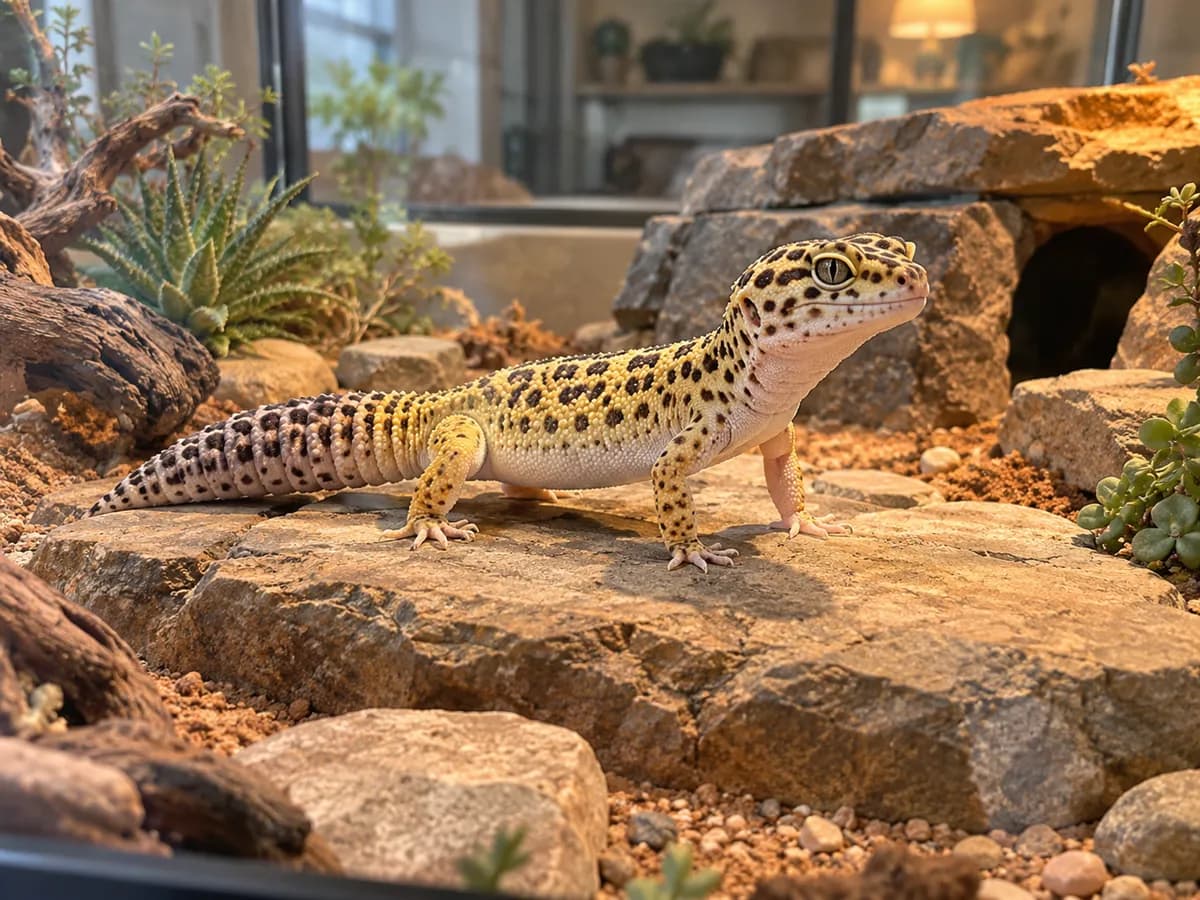 Leopard geckoWith their spotted patterns and calm temperament, leopard geckos can live for many years in a well-built vivarium. Warm, cool and humid hides are the foundation of their care.Explore
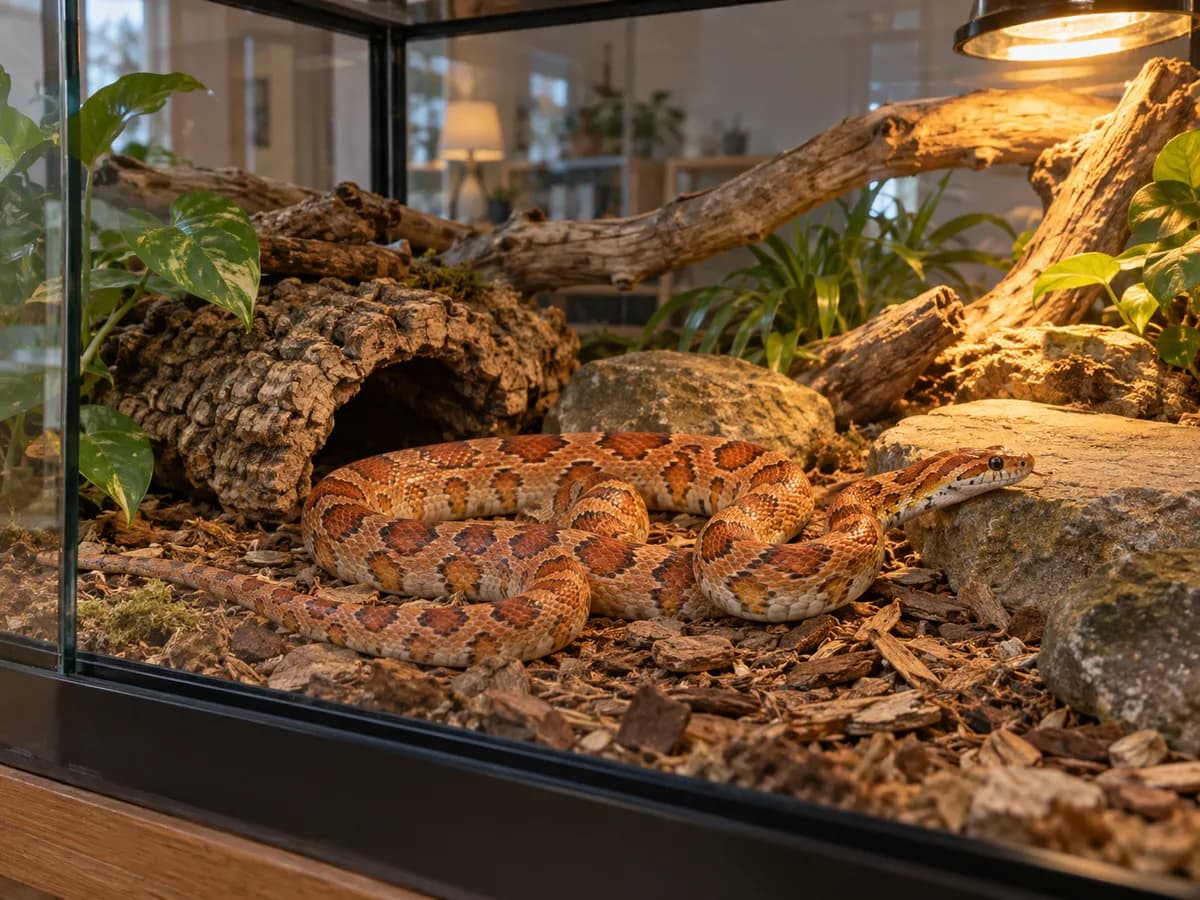 Corn snakeCalm and a manageable size, corn snakes are a popular reptile from North America. An escape-proof enclosure, the right temperature layout and regular but infrequent meals are their basic needs.Explore
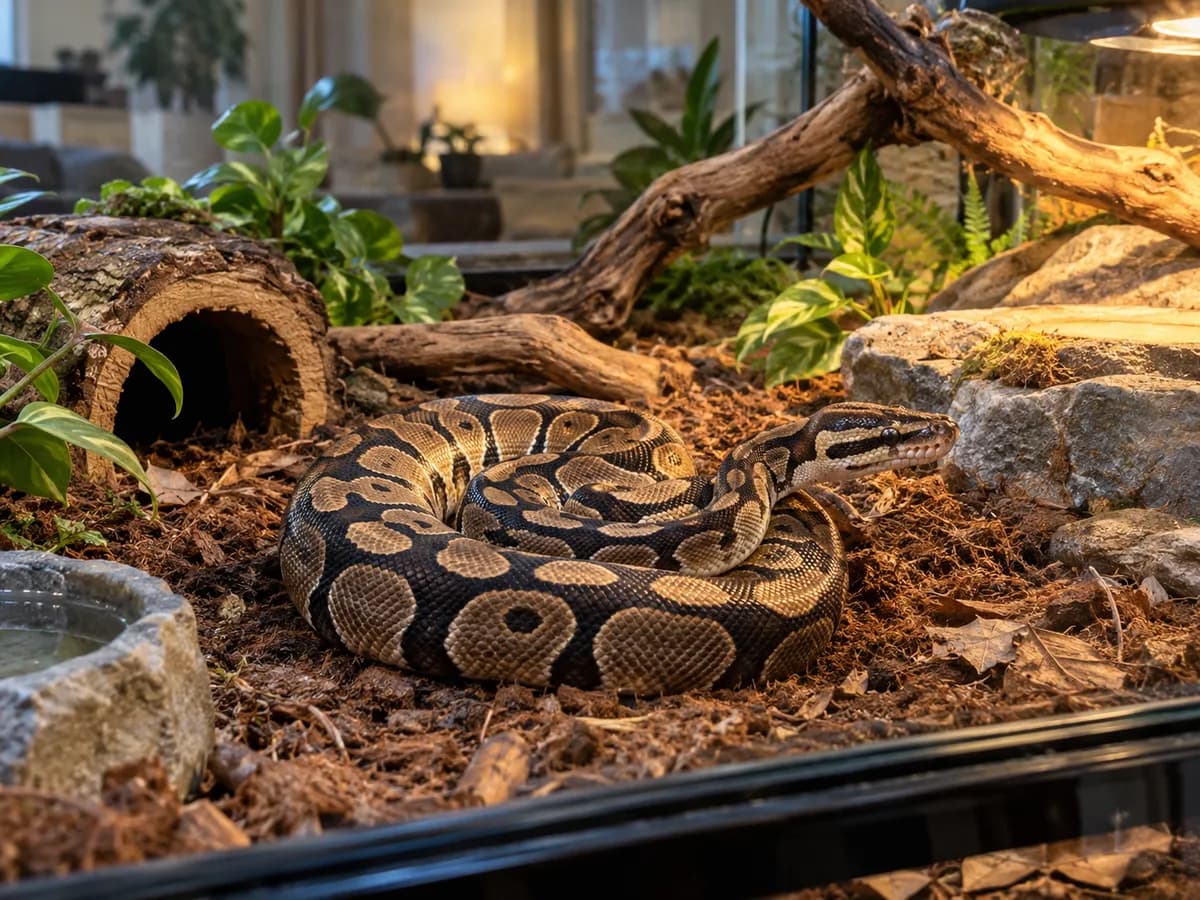 Ball pythonNative to West and Central Africa, ball pythons are known for their calm temperament and their habit of curling into a ball when threatened. They need snug hides, steady heat and humidity, and a patient feeding routine.Explore
Happier together
Create a free profile for your companion.
Enter the date of birth or an estimated age to see its life stage, weight history and matching guides in one place.
- Life-stage tracking
- Weight history
- Guides for its species
- Free account