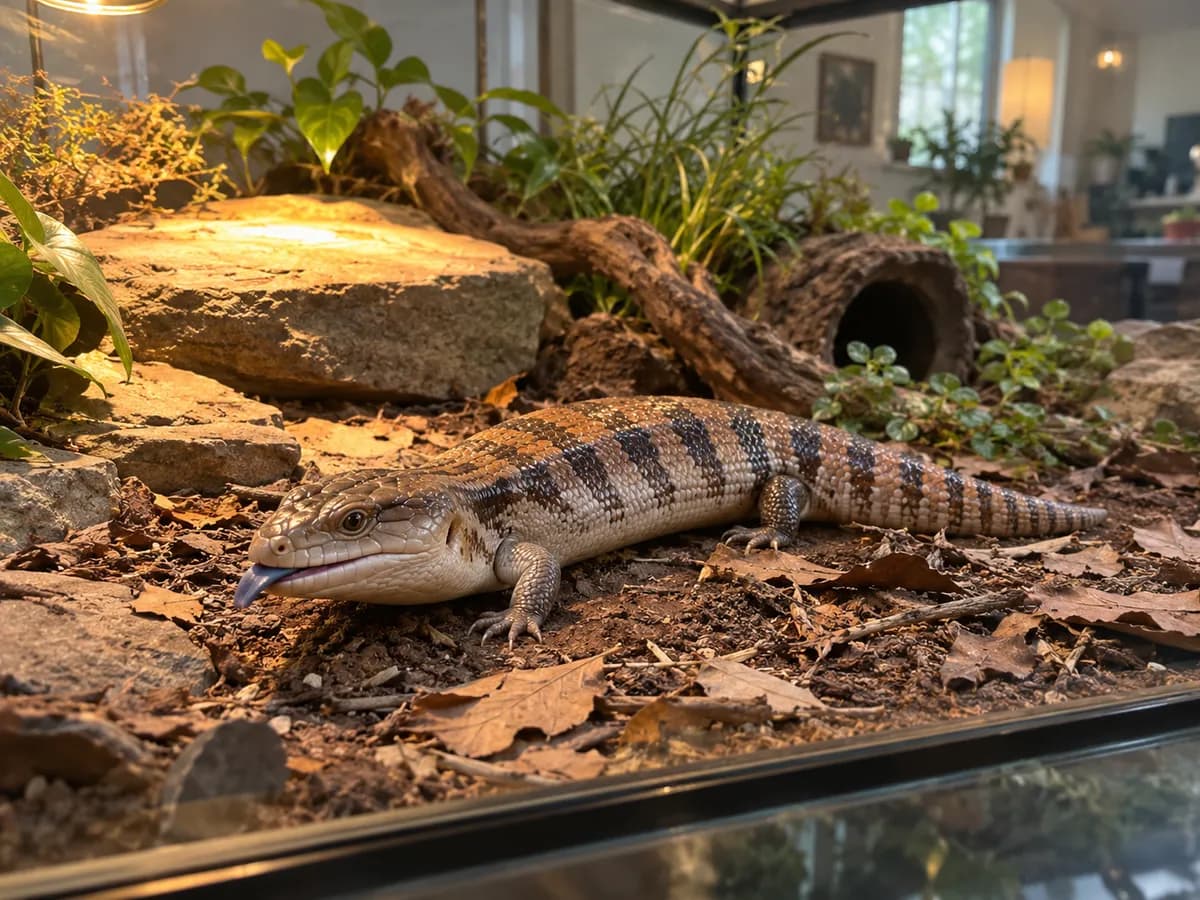
- Typical lifespan
- 15–20 years
- Social needs
- Prefers to live alone
- Active hours
- Active by day
- Experience level
- Needs some experience
Values are typical ranges and vary with breed, husbandry and the individual animal.
Quick care summary
The care essentials for Blue-tongued skinks.
In depth
In short
- Day-active, ground-dwelling lizards with a heavy build.
- When threatened they flash their blue tongue as a warning.
- They prefer burrowing and roaming over climbing, so floor space matters most.
- They are omnivores that eat both animal and plant foods.
- A heat source and UVB lighting are core parts of their daily routine.
Blue-tongued skinks are short-legged, heavy-bodied lizards from Australia, New Guinea and nearby islands. They are active during the day, basking in the morning and roaming in search of food.
Nature and behavior
They are usually calm, curious and tolerant of handling. When startled they open their mouth, show their bright blue tongue and may hiss; this is a defensive display. Support their whole body when handling. They are kept alone; housing them together can lead to fights.
Living space
They need a large enclosure where floor area matters more than height. Provide a deep substrate for burrowing, hides and a basking spot. Create a warm side and a cool side, with heaters on a thermostat. A reptile UVB lamp is replaced at the interval the manufacturer recommends. Humidity needs vary between subspecies, so it is important to know your skink's origin.
Feeding routine
They are omnivores. Their diet is usually a balanced mix of dark leafy greens and vegetables, suitable animal protein sources and a small amount of fruit. Adults eat less often than juveniles. Ask a reptile-experienced veterinarian about a calcium and vitamin supplement routine. Fresh water should always be available.
Care notes
- UVB: Replace the lamp when its recommended lifespan ends, not only when it stops glowing.
- Burrowing: Keep the substrate deep enough.
- Weighing: Regular weigh-ins help track condition; this species can be prone to weight gain.
- Hygiene: Wash your hands after handling.
Good to know
The most important points.
- When to contact a vetIf you notice a prolonged change in appetite or activity, weight loss, anything unusual around the mouth or patchy sheds, contact a veterinarian experienced with reptiles.
Similar animals
Other animals in the same group.
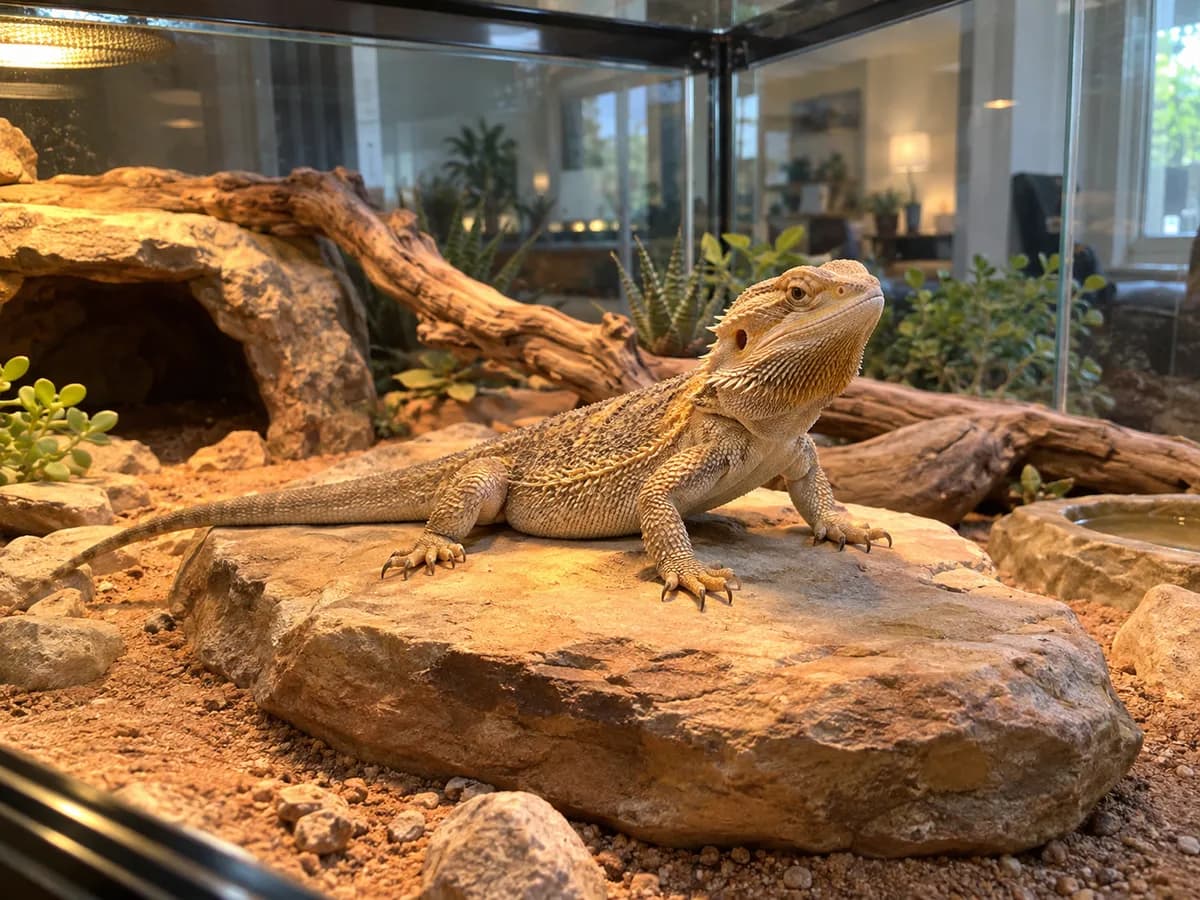 Bearded dragonCalm, curious and active by day, bearded dragons are delightful reptiles in a well-built vivarium. At the heart of their care are the right heat, the right UVB light and an age-appropriate diet.Explore
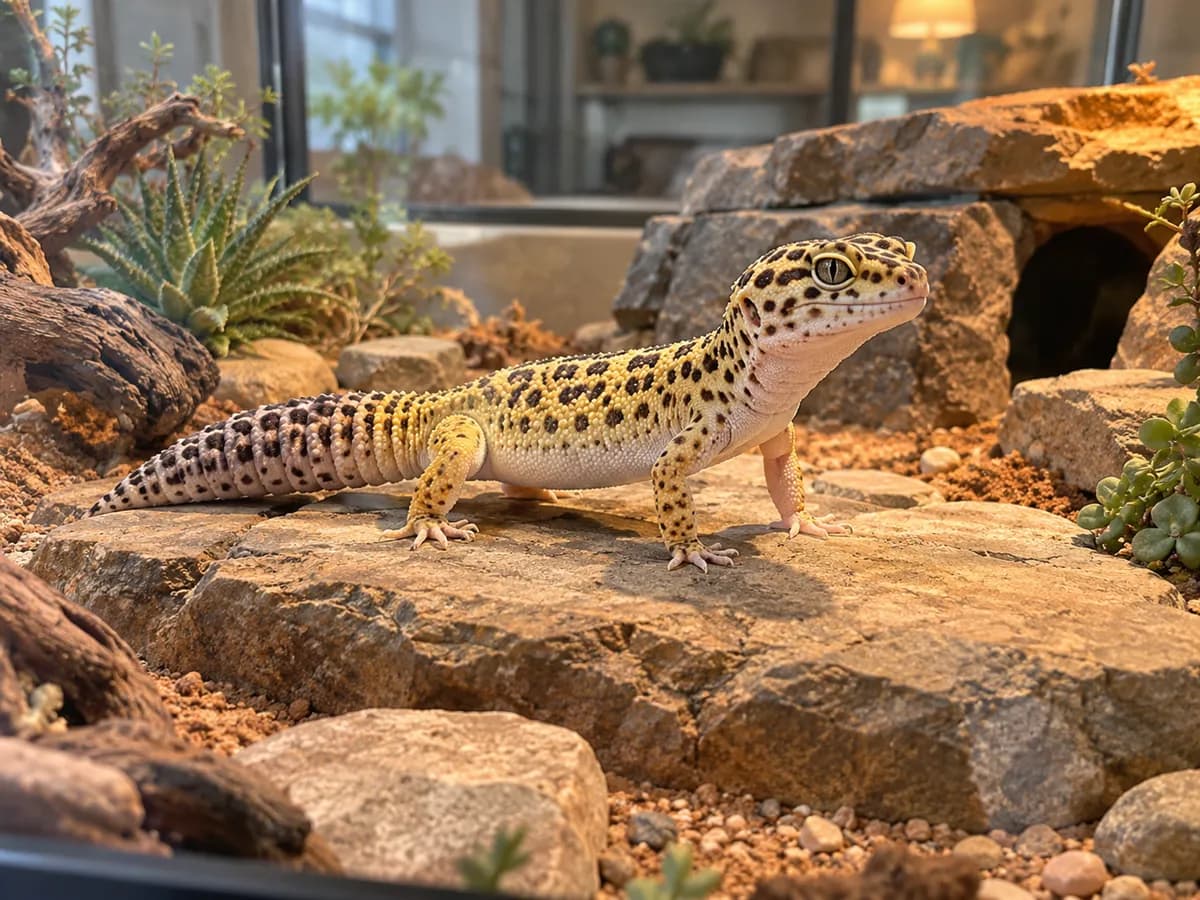 Leopard geckoWith their spotted patterns and calm temperament, leopard geckos can live for many years in a well-built vivarium. Warm, cool and humid hides are the foundation of their care.Explore
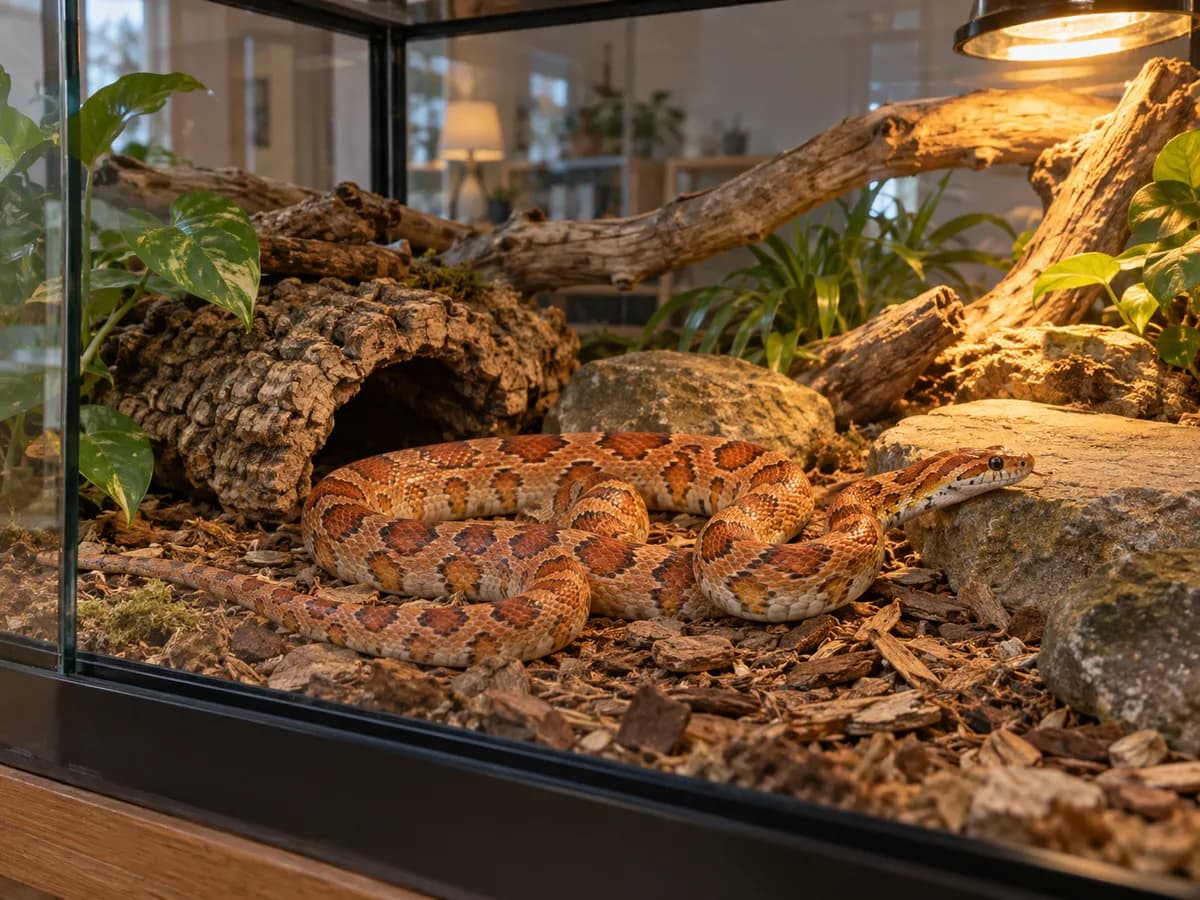 Corn snakeCalm and a manageable size, corn snakes are a popular reptile from North America. An escape-proof enclosure, the right temperature layout and regular but infrequent meals are their basic needs.Explore
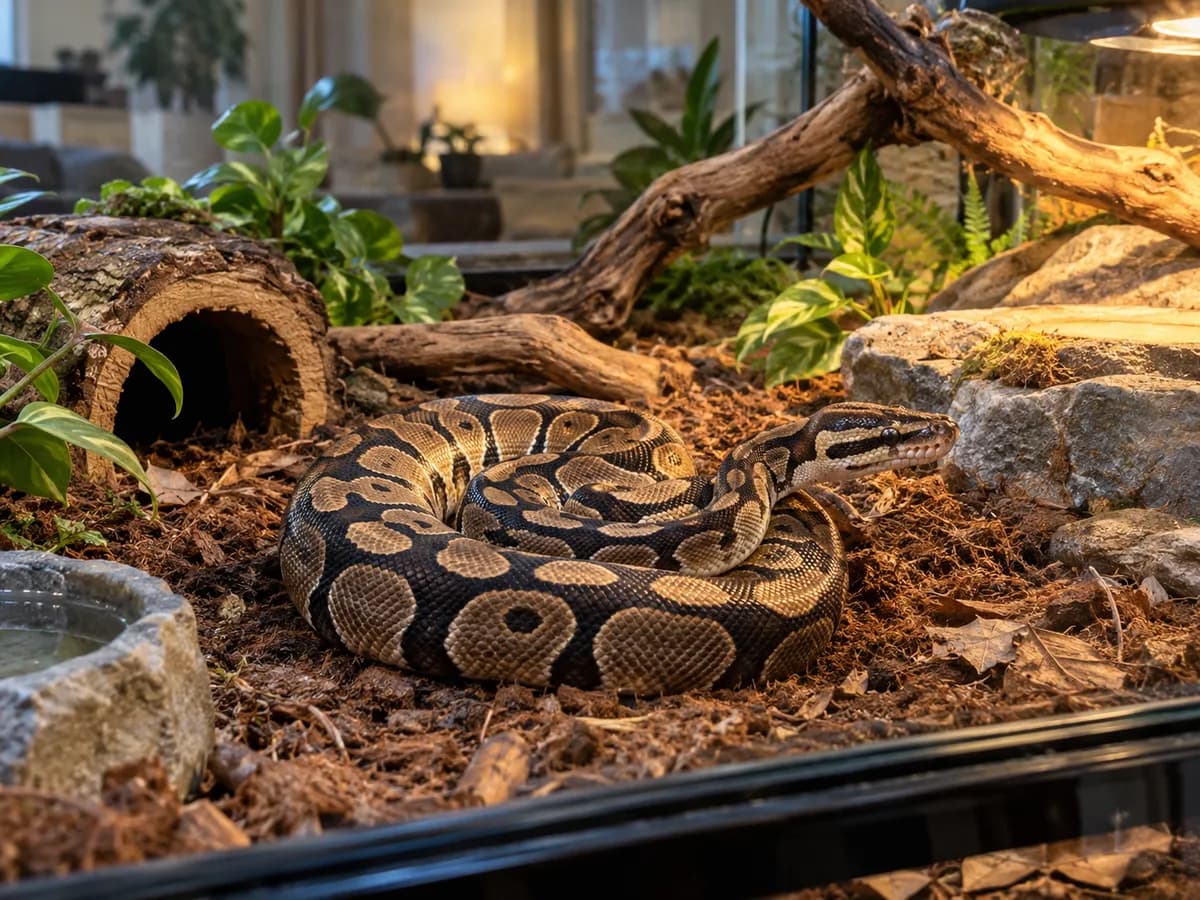 Ball pythonNative to West and Central Africa, ball pythons are known for their calm temperament and their habit of curling into a ball when threatened. They need snug hides, steady heat and humidity, and a patient feeding routine.Explore
Happier together
Create a free profile for your companion.
Enter the date of birth or an estimated age to see its life stage, weight history and matching guides in one place.
- Life-stage tracking
- Weight history
- Guides for its species
- Free account