
Fire salamanders
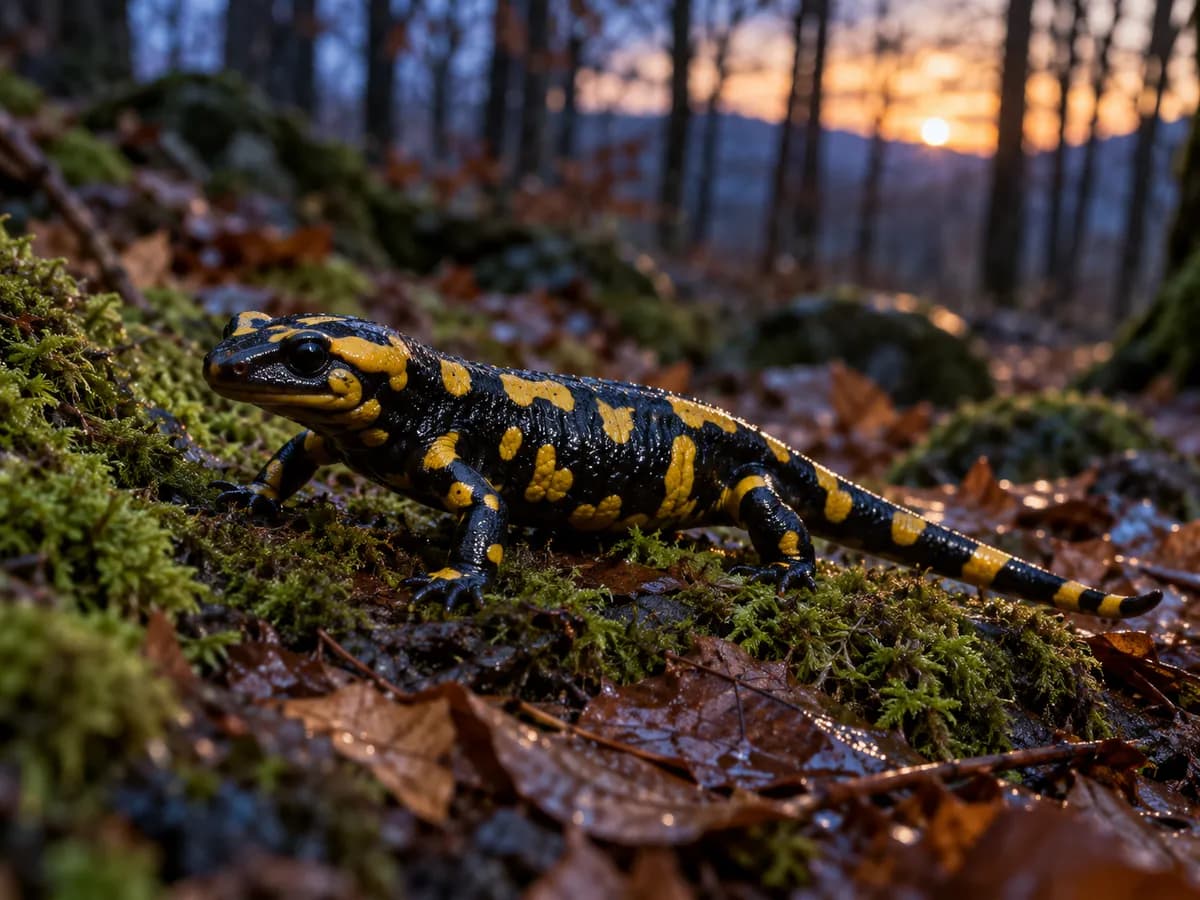
With its bright yellow-and-black pattern, the fire salamander lives in the damp, cool corners of European forests. Its vivid colours warn predators about the toxic substances in its skin.
- Length
- 15–25 cm
- Weight
- 20–40 g
- Lifespan in the wild
- 10–20 years
- Conservation status (IUCN)
- Vulnerable (VU)
Figures are approximate for adults and vary by sex, subspecies and population.
At a glance
The key facts about Fire salamanders.
- Where does it live?It lives in the damp deciduous forests of central and southern Europe, especially near clean streams and springs.
- What does it eat?It is a carnivore that eats worms, snails, slugs, spiders and insects.
- Behaviour and lifeFire salamanders are mostly active at night and in rainy weather.
- YoungUnlike most amphibians, the fire salamander does not lay eggs: the female releases well-developed larvae directly into clean, cool streams.
In depth
In short
- The fire salamander is a yellow-and-black amphibian.
- It lives in damp deciduous forests and along streams.
- Glands in its skin produce toxic secretions against predators.
- It mostly comes out at night and in rainy weather.
- The IUCN lists it as Vulnerable; a deadly fungal disease is among the main threats.
The fire salamander (Salamandra salamandra) is a stout salamander with bright yellow, sometimes orange, markings on a black background. Its vivid colours act as a "warning colour", telling predators it is toxic. Other, similar salamander species live in Türkiye.
Where does it live?
It lives in the damp deciduous forests of central and southern Europe, especially near clean streams and springs. During the day it hides under stones, logs and leaves or in holes in the ground.
What does it eat?
It is a carnivore that eats worms, snails, slugs, spiders and insects. Its larvae eat small invertebrates in the water.
Behaviour and life
Fire salamanders are mostly active at night and in rainy weather. They move slowly and, when threatened, produce a toxic secretion from glands in their skin. In the cold months they hibernate in sheltered places.
Young
Unlike most amphibians, the fire salamander does not lay eggs: the female releases well-developed larvae directly into clean, cool streams. The larvae breathe with gills and after a few months turn into small salamanders that live on land.
Conservation status
In its 2022 assessment, the IUCN listed the fire salamander as Vulnerable (VU). In parts of Europe, a fungal disease caused by Batrachochytrium salamandrivorans (Bsal) has caused severe die-offs in fire salamander populations. Habitat loss, polluted streams and road deaths are also threats.
Fun facts
- The "fire" in its name comes from an old belief that salamanders could survive fire; this is a myth.
- Each salamander's yellow pattern is unique.
- Fire salamanders can live for decades in the wild.
Good to know
The most important points.
- Don't touchFire salamander skin secretions can be irritating. If you see one in the wild, do not touch it or move it.
Similar animals
Other animals in the same group.
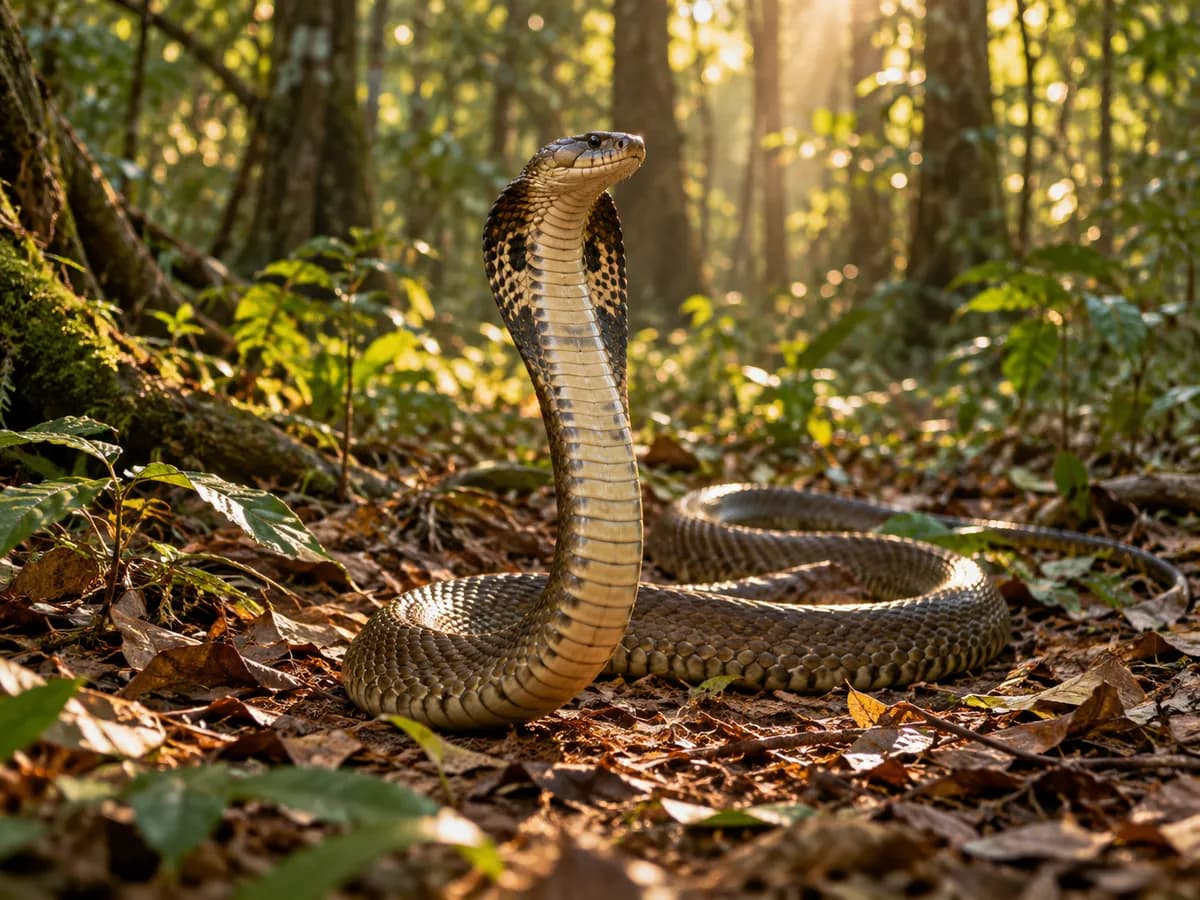 King cobraThe world's longest venomous snake, the king cobra warns intruders by raising its head off the ground and spreading its hood. Most of its diet is other snakes.Explore
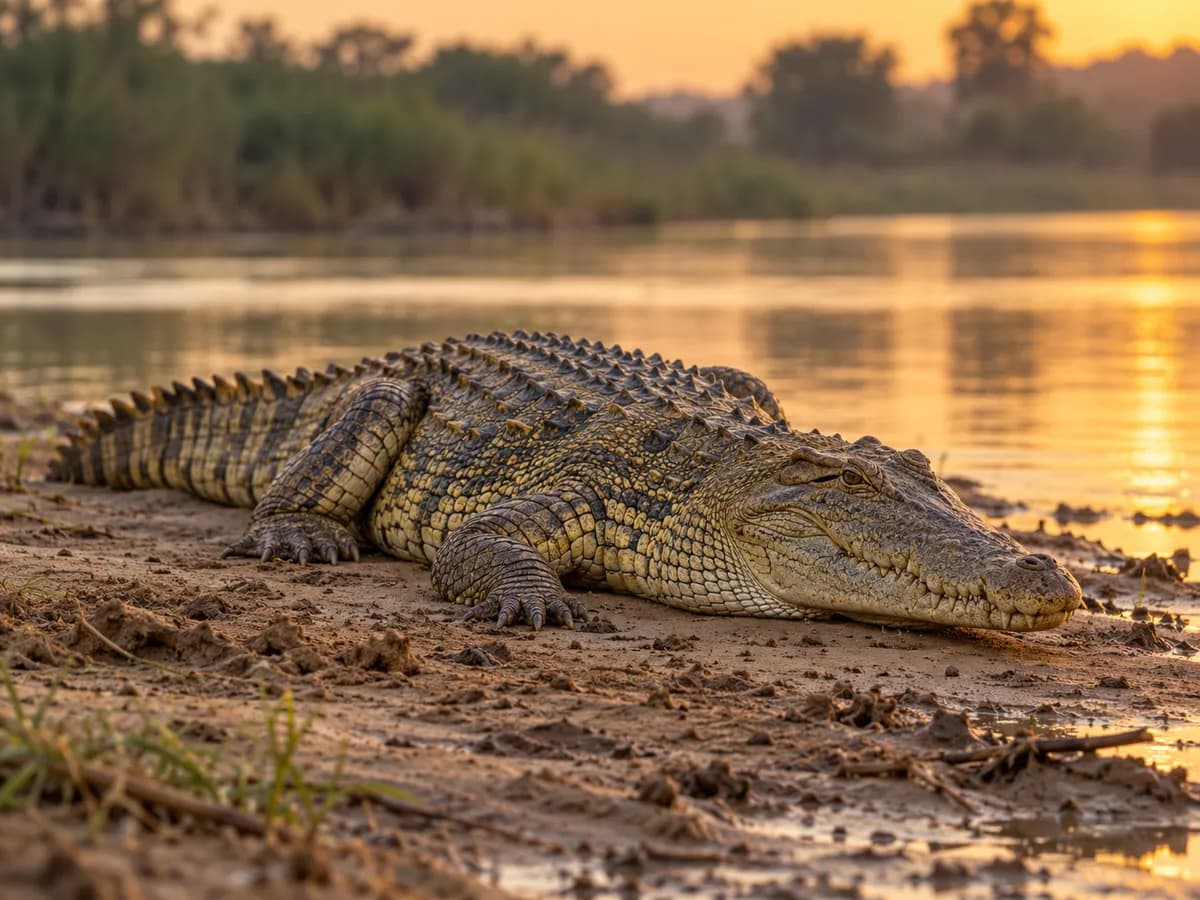 Nile crocodileAfrica's largest reptile, the Nile crocodile is the patient hunter of rivers and lakes. Despite its cold-blooded image, it cares for its young with surprising attention.Explore
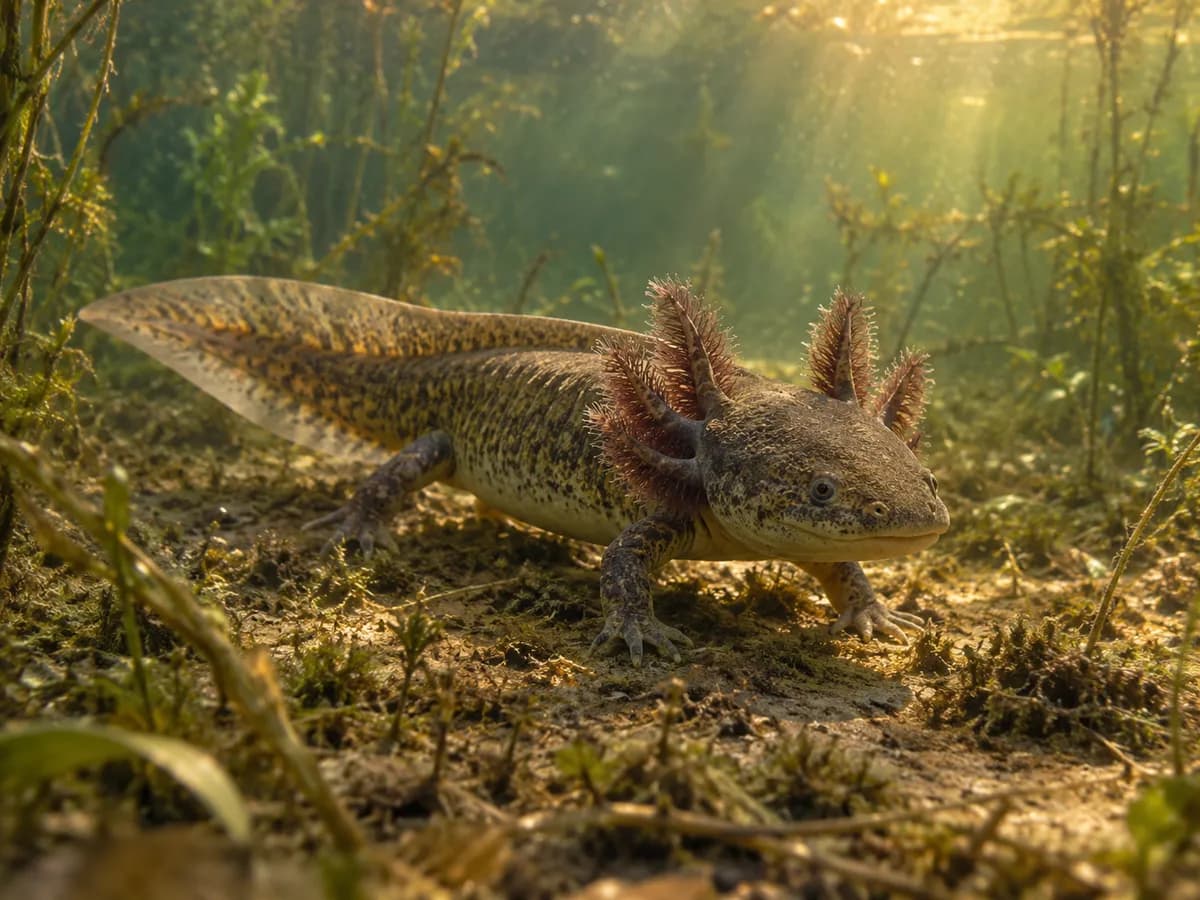 AxolotlThe axolotl keeps its larval look even as an adult and draws scientific interest for its ability to regrow lost body parts. In the wild it lives only in a few canals near Mexico City and is critically endangered.Explore
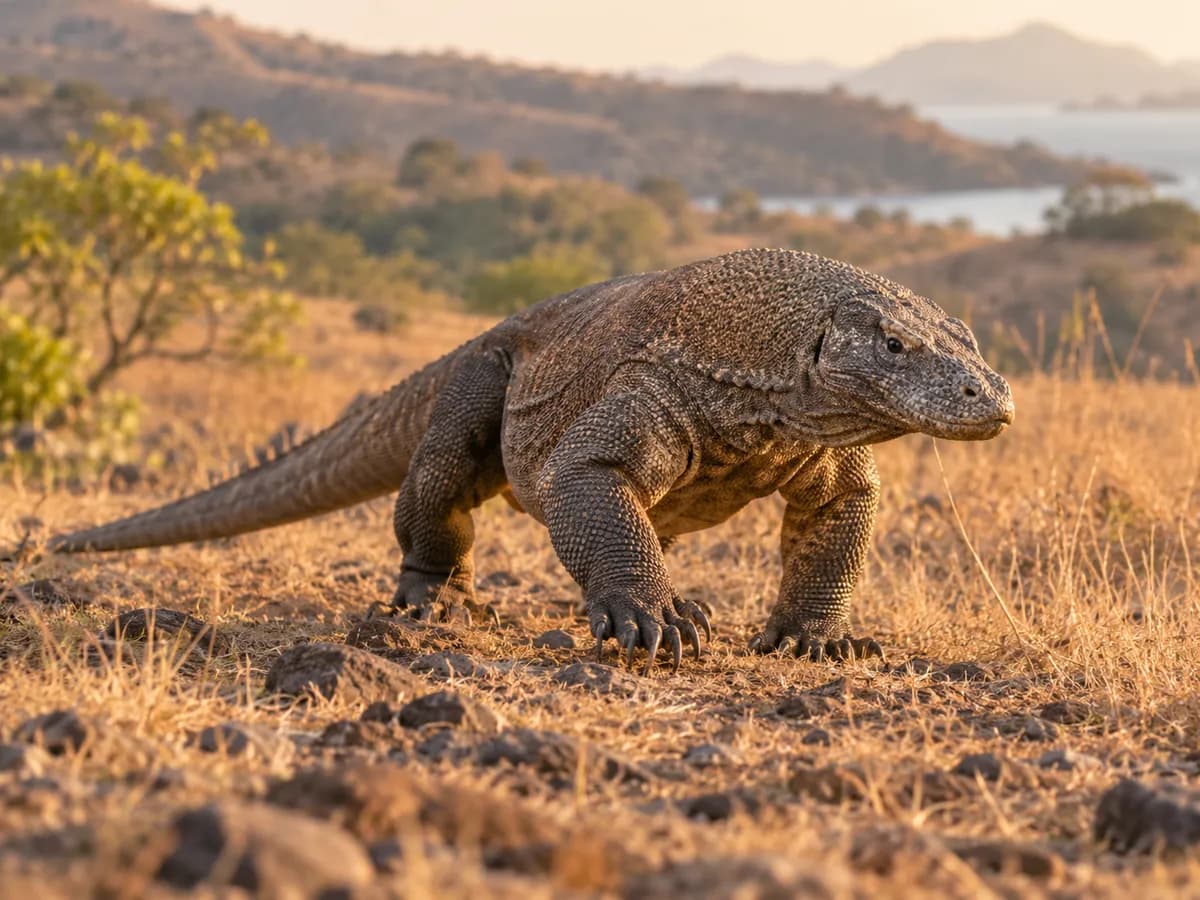 Komodo dragonThe world's largest lizard, the Komodo dragon is a powerful predator that lives on a few Indonesian islands. Venom in its bite helps weaken its prey.Explore
Respect for nature, stronger tomorrows
Protecting wildlife is everyone's responsibility.
If you find an injured or young wild animal, don't touch it; inform your local wildlife authority. More knowledge, more awareness.
- Respect natural habitats
- Watch wild animals from afar
- Leave no litter in nature
- Support a sustainable future