

King cobras
The world's longest venomous snake, the king cobra warns intruders by raising its head off the ground and spreading its hood. Most of its diet is other snakes.
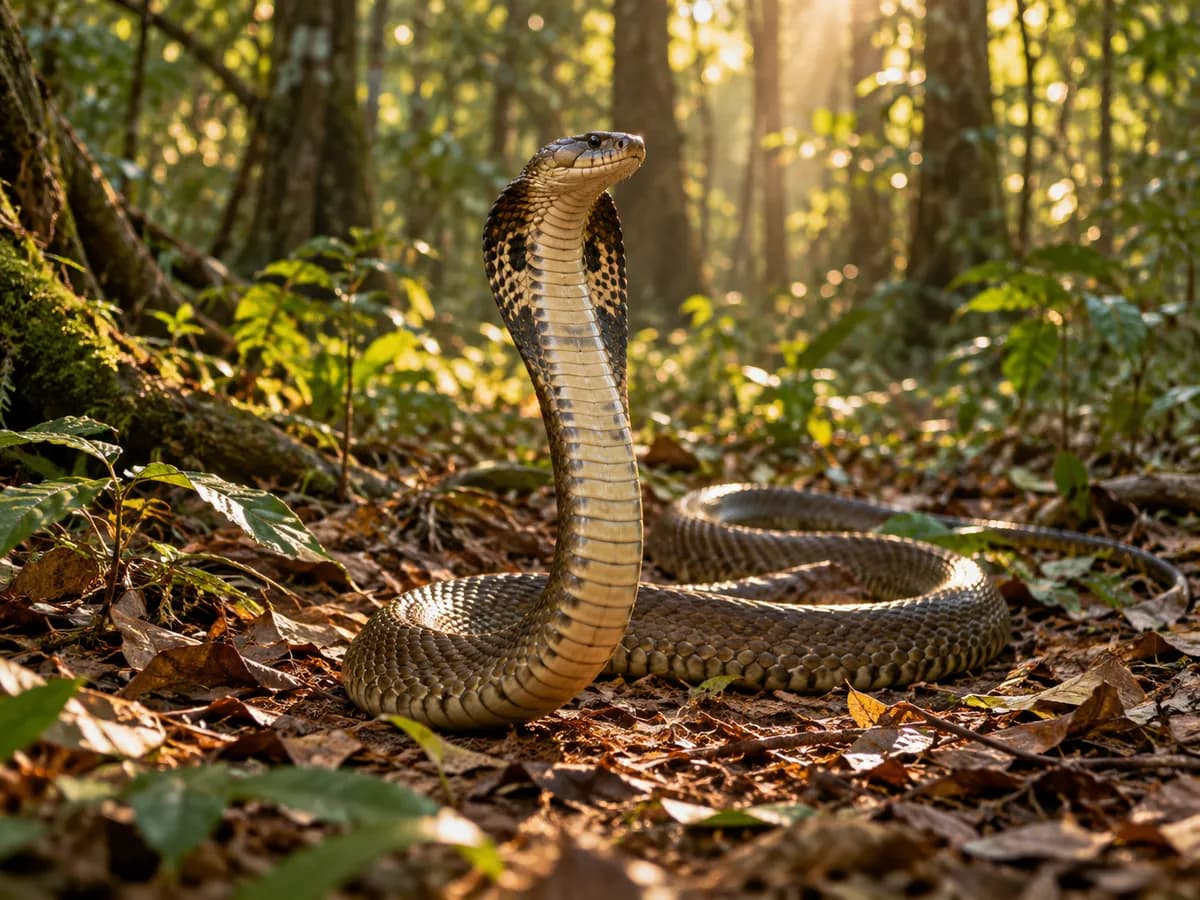
- Length
- 3–5.5 m
- Weight
- 5–12 kg
- Lifespan in the wild
- 15–20 years
- Conservation status (IUCN)
- Vulnerable (VU)
Figures are approximate for adults and vary by sex, subspecies and population.
At a glance
The key facts about King cobras.
- Where does it live?It lives from India through Southeast Asia, from southern China to the Philippines and Indonesia.
- What does it eat?Its main prey are other snakes such as rat snakes, pythons and other cobras; it sometimes eats lizards.
- Behaviour and social lifeKing cobras live alone and usually avoid people.
- YoungInstead of laying her eggs on the ground, the female builds a nest of leaves and twigs and usually guards it for a time.
In depth
In short
- The king cobra is the world's longest venomous snake.
- Its main food is other snakes.
- The female is one of very few snakes that builds a nest of leaves for its eggs.
- When threatened it raises the front of its body and spreads its hood.
- The IUCN lists it as Vulnerable; deforestation and hunting are the main threats.
The king cobra (Ophiophagus hannah) can grow longer than 5 metres, making it the world's longest venomous snake. Its scientific name Ophiophagus means "snake eater". Despite its name, it belongs to a different genus from other cobras. Recent genetic studies suggest king cobras may actually be several species.
Where does it live?
It lives from India through Southeast Asia, from southern China to the Philippines and Indonesia. It prefers rainforests, dense forests, bamboo thickets and the edges of wetlands.
What does it eat?
Its main prey are other snakes such as rat snakes, pythons and other cobras; it sometimes eats lizards. Its powerful neurotoxic venom quickly paralyses prey. After a large meal it can go a long time without eating.
Behaviour and social life
King cobras live alone and usually avoid people. When threatened, it raises the front of its body, spreads its hood and makes a deep, growl-like hiss. This display is often a warning before any strike.
Young
Instead of laying her eggs on the ground, the female builds a nest of leaves and twigs and usually guards it for a time. Hatchlings are venomous and independent.
Conservation status
The king cobra is listed as Vulnerable (VU) on the IUCN Red List. Deforestation, hunting for skins and traditional medicine, and killing out of fear are the main threats.
Fun facts
- Its venom is very potent, but bites are rare; it usually prefers to escape.
- It can lift its head up to the eye level of a standing adult.
- Snakes smell with their tongues; the forked tongue collects chemical traces from the air.
Good to know
The most important points.
- Keep away from wild animalsNever handle or try to catch venomous snakes. In case of a snakebite, call emergency services immediately.
Similar animals
Other animals in the same group.
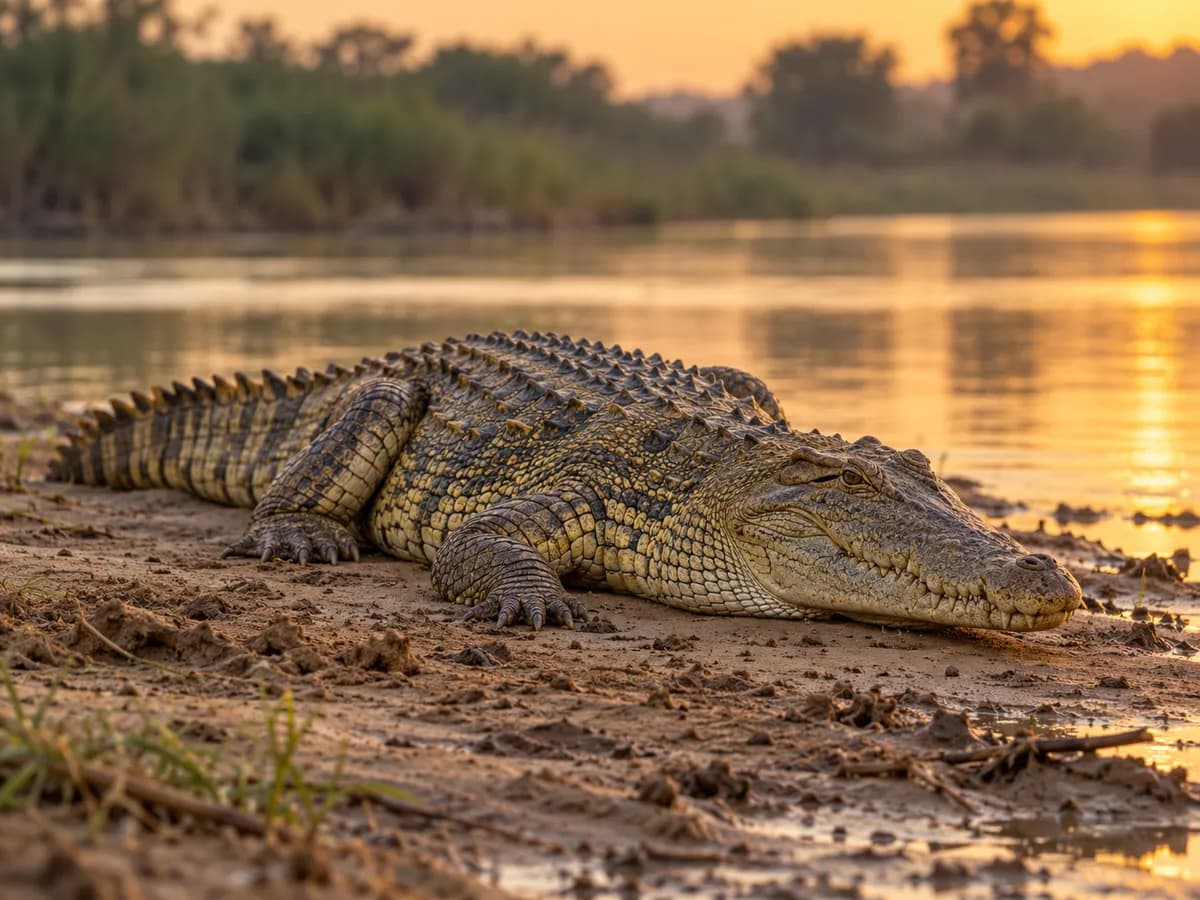 Nile crocodileAfrica's largest reptile, the Nile crocodile is the patient hunter of rivers and lakes. Despite its cold-blooded image, it cares for its young with surprising attention.Explore
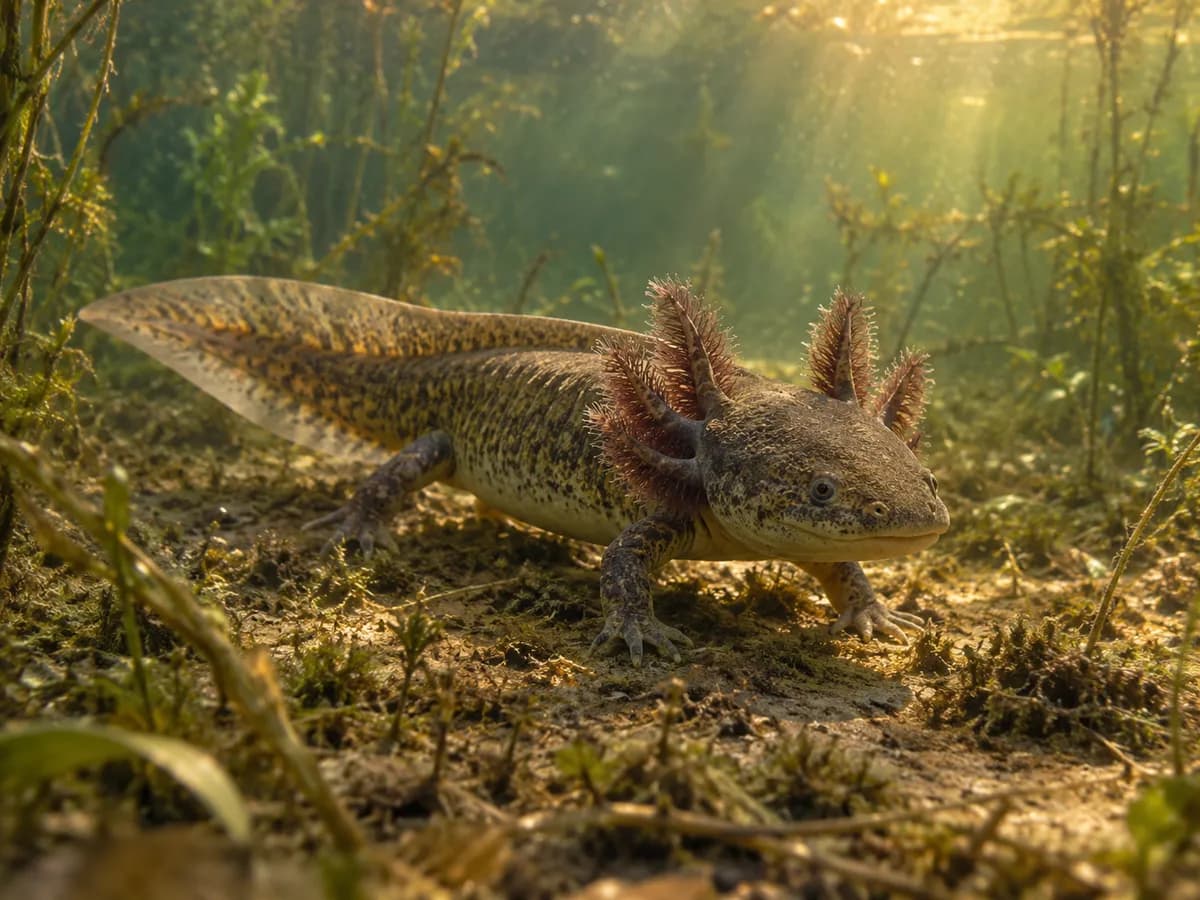 AxolotlThe axolotl keeps its larval look even as an adult and draws scientific interest for its ability to regrow lost body parts. In the wild it lives only in a few canals near Mexico City and is critically endangered.Explore
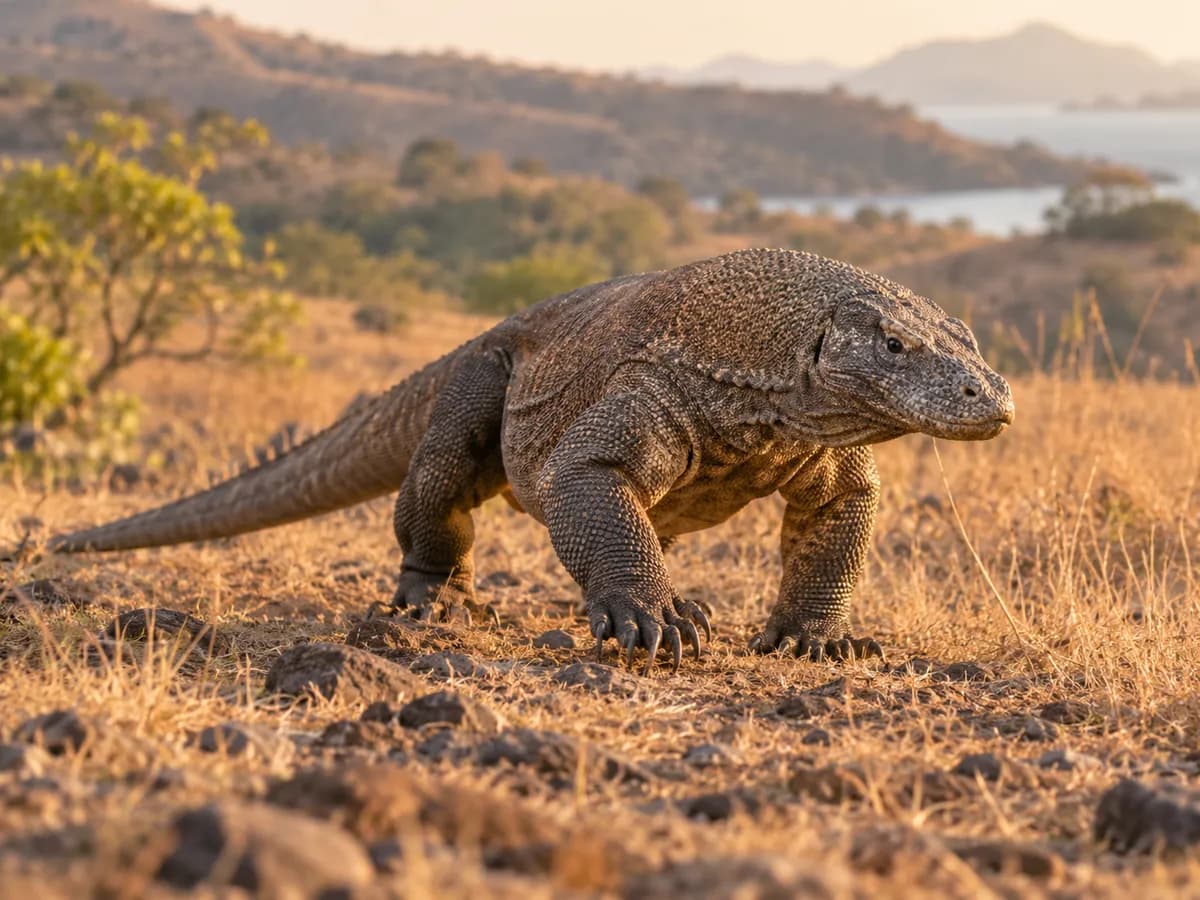 Komodo dragonThe world's largest lizard, the Komodo dragon is a powerful predator that lives on a few Indonesian islands. Venom in its bite helps weaken its prey.Explore
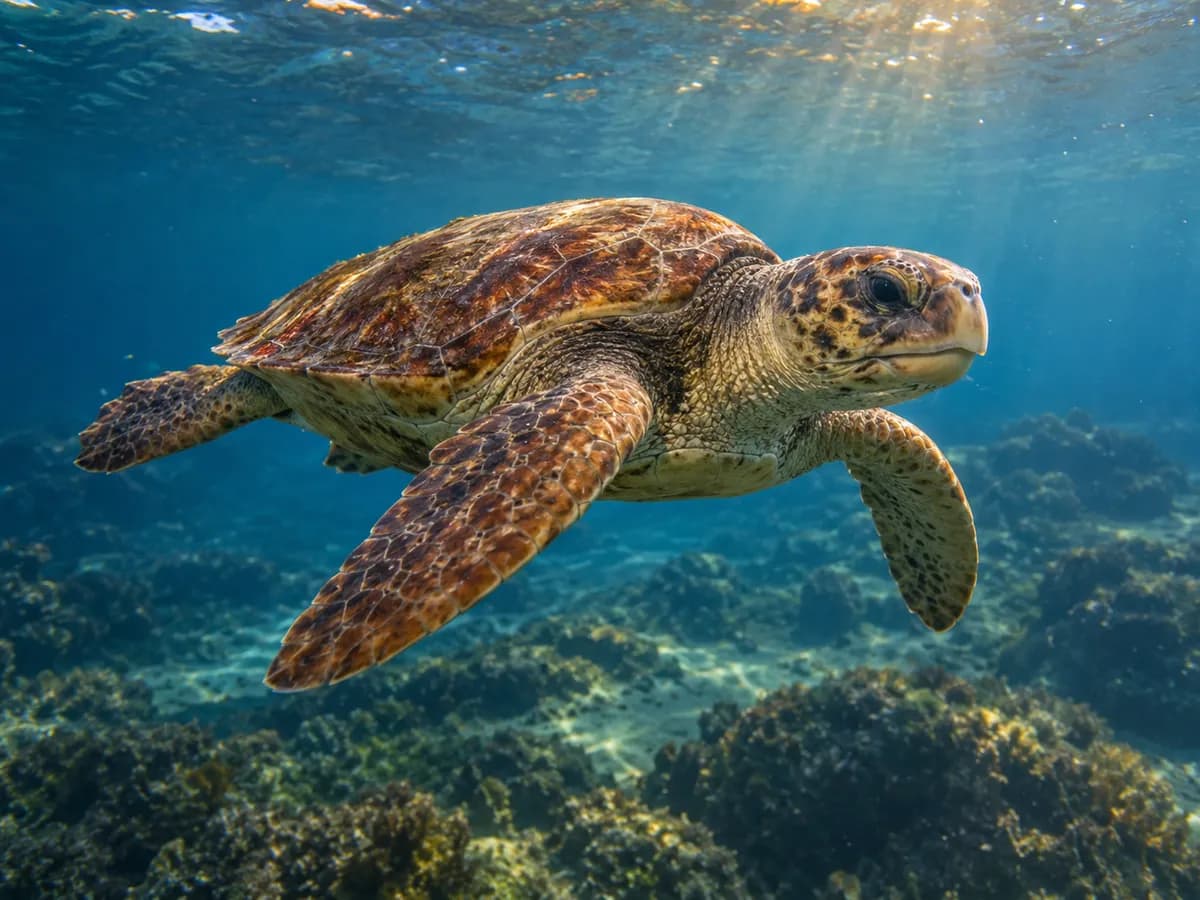 Loggerhead sea turtleKnown for its big head and strong jaws, the loggerhead sea turtle nests on beaches along Türkiye's Mediterranean and Aegean coasts. İztuzu beach at Dalyan is one of its best-known nesting sites.Explore
Respect for nature, stronger tomorrows
Protecting wildlife is everyone's responsibility.
If you find an injured or young wild animal, don't touch it; inform your local wildlife authority. More knowledge, more awareness.
- Respect natural habitats
- Watch wild animals from afar
- Leave no litter in nature
- Support a sustainable future