

Litter box setup: why your cat avoids it and how to get it right
A cat that stops using the litter box is rarely being "stubborn": the box's location, size, litter or cleanliness doesn't suit them. Rule out health warning signs first, then go through four setup decisions.
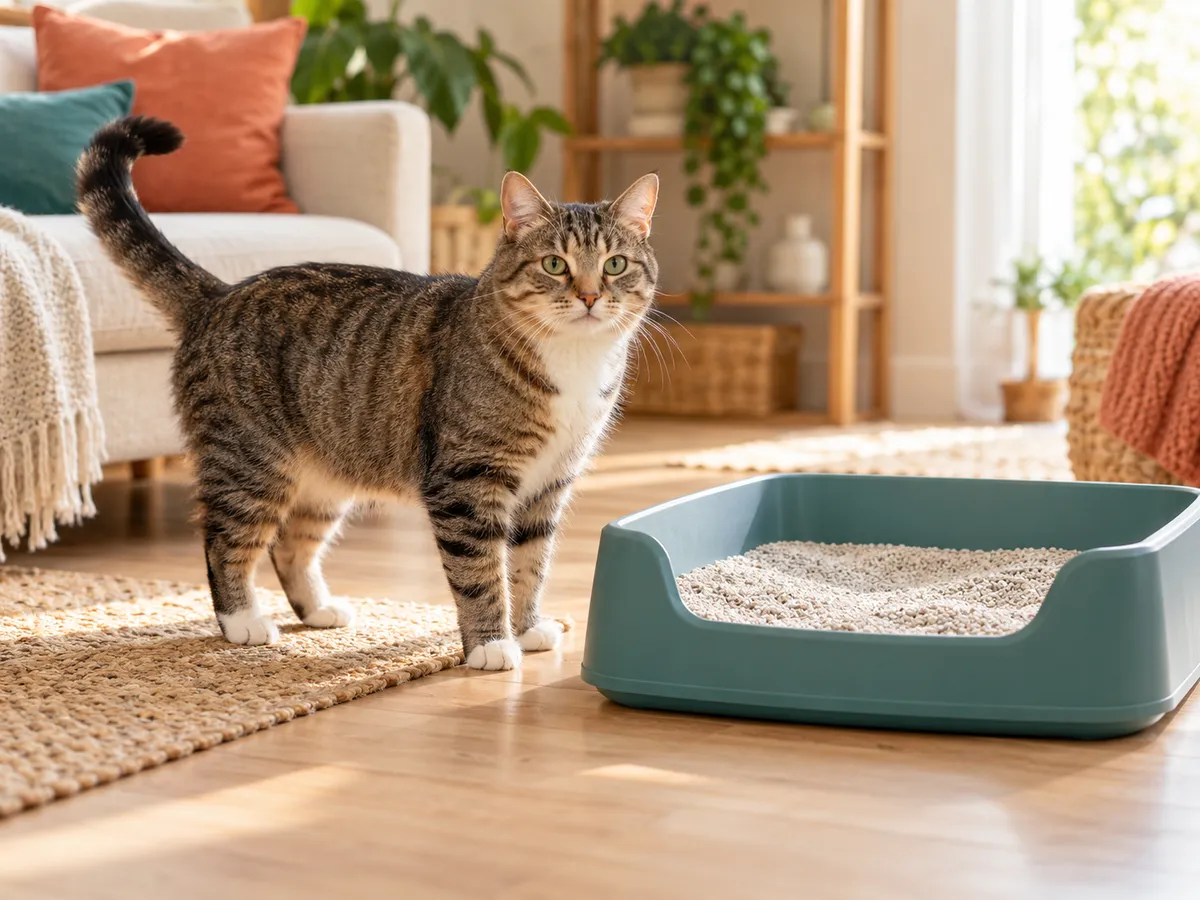
In short
- If the change came on suddenly, check for health warning signs first; a cat that cannot pee is an emergency.
- One more box than the number of cats, in separate places.
- The box should be at least one and a half times your cat's length.
- Most cats choose unscented, fine-grained litter; scoop every day.
- Change one thing at a time and never punish your cat.
In this guide
A cat that stops using the litter box, or goes right next to it, is usually telling you something: the box, the litter, the spot or the cleaning routine doesn't work for them. In the wild, cats pick a diggable, clean place away from danger, do their business and cover it up. The closer your setup comes to that, the more happily the box gets used.
First, tell the two apart: setup or health?
If your cat has suddenly abandoned a box they used without trouble for years, the cause may be medical rather than the setup. Urinary problems, constipation or joint pain can make the box an unpleasant place, and the cat starts looking elsewhere.
If none of these apply and the problem started with a new box or litter, a house move or a new animal at home, work through the setup decisions below.
Four decisions: number, place, box and litter
| Decision | Rule of thumb | Why it matters |
|---|---|---|
| How many boxes? | One more than the number of cats: two for one cat, three for two | A dirty or occupied box always has a backup; cats may not want to share |
| Where? | Quiet, easy to reach, away from food and water; in separate spots | Boxes lined up side by side count as a single toilet to a cat |
| Which box? | At least one and a half times the cat's length (nose to base of tail) | The cat needs to turn and dig comfortably; many shop-bought boxes are too small |
| Which litter? | Unscented, fine-grained, clumping; deep enough to dig in | Scented litter may smell nice to us but can bother a cat's sensitive nose |
Covered boxes make some cats feel safe; for others they trap smells and become off-putting. If you're unsure, offer both types side by side for a while: your cat will soon show you which one they prefer.
Look at your home when choosing the spot
- Small flat: A bathroom or utility room can work, but not next to the washing machine, the boiler or a door that bangs. One sudden noise can be enough to put a cat off the box for good.
- Several floors: Keep at least one box on every floor. For an older cat, a flight of stairs can be reason enough not to go.
- More than one cat: Place boxes where a cat can't be cornered and has two ways out. If one cat blocks another from the box, put boxes in different parts of the home.
- Kittens and senior cats: Low-sided boxes make getting in and out easier. Kittens should find the box easily in the first days, so don't give them the run of the whole home straight away.
A cleaning rhythm
Scoop clumps and faeces every day, ideally twice a day. Depending on the litter and the number of cats, replace all of the litter every few weeks and wash the box with hot water and an unscented cleaner. Bleach and strong-smelling products can make the box smell "foreign".
If your cat goes outside the box: sign, likely cause, what to change
| What you see | Likely cause | What to change |
|---|---|---|
| Going right next to the box | Box too small, sides too high, or litter dirty | A bigger, low-sided box; more frequent scooping |
| Stepping in and straight out without digging | The litter's smell or texture | Unscented, fine-grained litter; mix it in gradually |
| Always the same rug or soft surface | Prefers that texture, or the box is too far away | Put a box on that spot for now, then move it slowly |
| Looking around while going, leaving in a hurry | Noise, or pressure from another cat | A quieter place; a spot with two exits; an extra box |
| Started after a new litter or box | Sudden change | Go back to the old setup and change things gradually |
| Urine over the edge of the box | Cat stands to pee, or box is shallow | A high-sided box with a low entry |
How to make changes
- Change one thing at a time. If you swap the box, the litter and the location all at once, you won't know what helped.
- Put the new one next to the old one. Remove the old box or litter only once your cat is using the new one.
- Switch litter gradually. Over several days, mix more and more of the new litter into the old.
- Clean accidents thoroughly. Use an enzyme cleaner; ammonia-based products smell like urine and draw the cat back to the same spot.
- Don't punish. Shouting or taking the cat to the soiled spot links the toilet with fear and makes the problem worse.
Try this week
- Watch your cat at the box once: can they turn and dig comfortably?
- Count your boxes: number of cats + 1, in separate places?
- Remove noise sources next to the box, or move the box.
- If you use scented litter, start a gradual switch to an unscented one.
- If the problem continues or you see health warning signs, book a vet appointment.
If a new kitten is joining your home, setting up the litter box right from day one makes everything easier: see Bringing a kitten home for how to organise the first weeks.
This content is for general information only and does not replace a veterinary examination or diagnosis. If you are worried about your pet's health, please contact your veterinarian.