

In short
- Adult goldfish need a large aquarium with strong filtration, or a suitable pond.
- Regular water tests and partial water changes are the most important routine.
- Overfeeding spoils the water; feed measured amounts.
- Fancy goldfish can be more sensitive when it comes to swimming and balance.
- Plants and chances to forage provide enrichment.
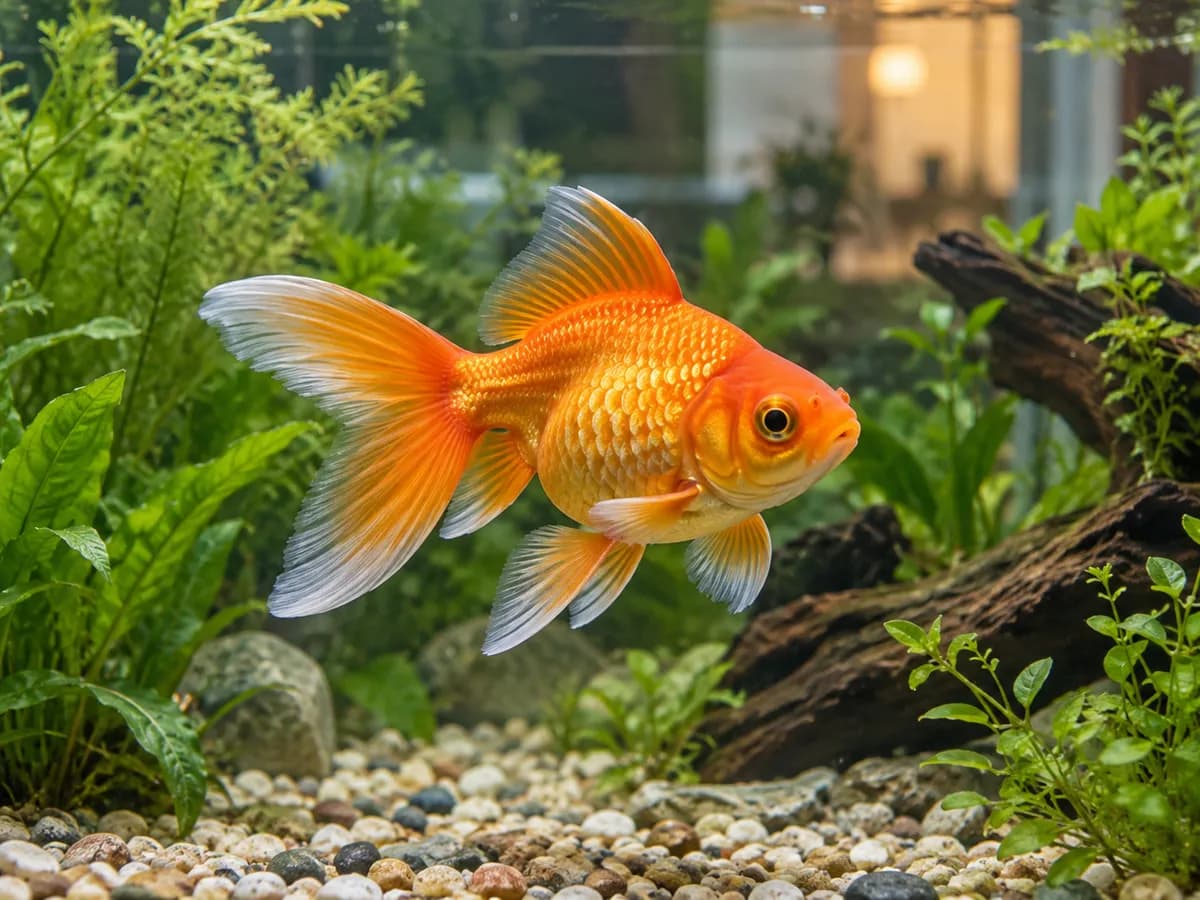
Adulthood runs from about 1 to 9 years of age. Goldfish can live a long time in good conditions, and this is the stage where a solid care routine is kept up for years.
What is happening in this stage?
- Growth slows but may continue; size depends on tank and care conditions.
- Colors can change over time.
- They may recognize you and come to the front of the tank at feeding time.
What should you do differently?
- Aquarium: A large, strongly filtered and well-aerated setup sized for the group.
- Diet: Goldfish food varied now and then with suitable vegetables and frozen foods, only as much as they eat in a few minutes.
- Water quality: Regular partial water changes, and don't rinse filter media under tap water, to protect the cycle.
- Enrichment: Hardy plants, open swimming space and chances to forage on the bottom.
What should you monitor?
- Water values (ammonia, nitrite, nitrate)
- Appetite, swimming and balance
- Fins, scales and eyes
- Chasing within the group
Expected behavior
Sifting the substrate, waiting at the surface for food, cruising as a group and chasing during breeding season can all be seen at this stage.
Reminders
- Weekly partial water change and water test
- Filter maintenance
- Seasonal checks for temperature swings
Next stage
From about 9 years of age your goldfish enters the senior stage.
Age ranges are approximate; differences within a species (such as size in dogs) can shift the transitions earlier or later.
This content is for general information only and does not replace a veterinary examination or diagnosis. If you are worried about your pet's health, please contact your veterinarian.